
Microbiome Skincare: What Prebiotics, Probiotics and Postbiotics Really Do for the Skin

 The short answer
Prebiotics feed the good bacteria on the skin, probiotics contain live microorganisms, and postbiotics are their stable, non-living metabolic products. Post- and prebiotics currently dominate in cosmetics because they are easier to formulate. The research is promising but still young – the most important basis for a healthy microbiome remains an intact skin barrier.
Three terms, one goal: strengthening the skin microbiome
The skin is colonised by millions of microorganisms that together form the skin microbiome – a balance that plays a key role in barrier function, moisture balance and defence against unwanted germs. Cosmetic products target three different points:
- Prebiotics: nutrients (e.g. certain sugars or plant extracts) that specifically promote the growth of the ‘good’ skin bacteria without containing living organisms themselves.
- Probiotics: live or inactivated cultures of microorganisms intended to supplement the microbiome directly.
- Postbiotics: metabolic products of microorganisms – such as enzymes or organic acids – without living cells. They are much easier to formulate stably in creams and serums than live cultures.
Why the trend is moving towards postbiotics
Live probiotics are a challenge in classic cosmetic formulations: preservation, shelf life and stability conflict with ‘live’ cultures. Postbiotics get around this problem because they already deliver the active metabolic products without having to be kept alive – which is why they currently dominate the market for microbiome cosmetics.
What does the research really show?
For microbiome approaches, there is already good evidence for inflammatory skin conditions such as atopic dermatitis and blemish-prone skin, where a disturbed balance of the skin flora plays a documented role. For broad cosmetic use – such as anti-ageing promises around microbiome care – the data is thinner: many studies are small, manufacturer-funded or not yet independently replicated. The approach is scientifically plausible, but ‘microbiome’ is now also used in marketing for products that are simply mildly formulated, without any proven effect on the skin flora.
The real basis: an intact skin barrier
Before pre-, pro- or postbiotics can work at all, the basic requirement must be met: an intact skin barrier. Aggressive cleansing, exfoliating too often or a disturbed pH often damage the microbiome more than any microbiome serum can make up for.
Gentle, pH-neutral cleansing as the foundation
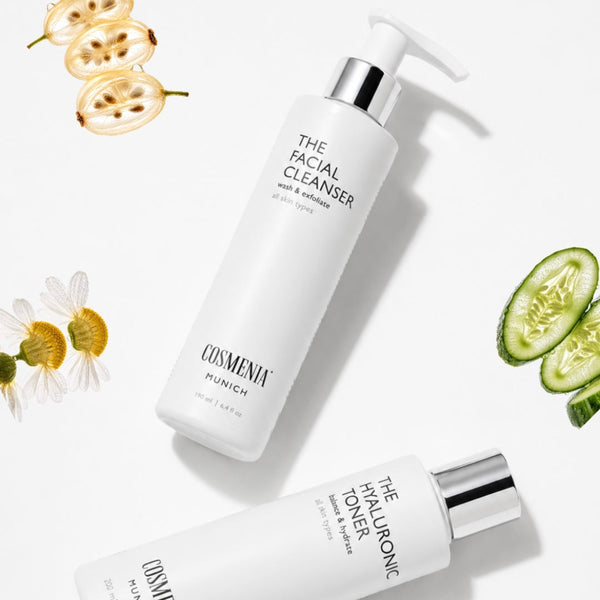
The Facial Cleanser cleanses thoroughly without throwing the skin flora off balance with overly aggressive surfactants – the basis for a healthy microbiome to be maintained at all.
Fermented ingredients as a natural ally
Fermented ingredients such as the Alteromonas ferment extract in The Hydrating Serum are themselves created through microbial processes and fit thematically with the microbiome idea, even though they aren't a classic prebiotic or probiotic.
Barrier protection instead of fighting symptoms
Plant lipids, such as those in The Day Cream, support the physical barrier that keeps the microbiome stable in the first place.
Frequently asked questions about microbiome skincare
Can I damage my skin microbiome through skincare?
Yes – the most common triggers are overly aggressive cleansing, excessive exfoliation and a disturbed acid mantle. Here, less but more targeted is often more.
Do probiotic creams with live bacteria make sense?
Rarely in practice – for stability reasons, most brands rely on post- or prebiotics anyway rather than actual live cultures.
Does microbiome skincare help with blemish-prone skin?
There are initial promising approaches, as an imbalance in the skin flora can play a role in blemishes – but it isn't a cure on its own; a holistic routine remains more important.
Conclusion
Microbiome skincare is more than a pure marketing term, but it's not a miracle cure either – in many areas, research is still in its early stages. The skin microbiome benefits most from a mild, barrier-strengthening routine rather than from individual specialist products. Discover Cosmenia's Hydra Barrier Repair Set for exactly that.
Want to see more from COSMENIA in your Google search results? Add us as a preferred source.


Comments