Beauty Blog
Skincare, honestly explained.
Actives, research and routines – from beautician Nia, without promises skincare can’t keep.

Popular topics

Copper Peptides for Wrinkles: What GHK Cu Can Really Do
2 days ago
Do copper peptides work against wrinkles? We took a close look at the most cited studies on GHK Cu: small, short and often industry linked. Here is what is actually proven and what your skin needs instead.
Continue reading

Zinc PCA vs. Niacinamide: Which Works Better Against Oily Shine?
3 days ago
Zinc PCA and niacinamide are both seen as mattifying ingredients. We look at what the evidence shows for each and where they differ.
Continue reading

Sun protection when skiing: is mineral SPF 30 really enough in the snow?
3 days ago
Altitude and snow noticeably increase UV exposure when skiing. What studies really show about SPF 30, mineral filters and reapplication.
Continue reading

Redness and Sensitive Skin in Winter: What Really Soothes?
3 days ago
Why sensitive skin turns red more easily in winter, what cold and central heating do to the skin barrier, and which gentle care really soothes – put into perspective.

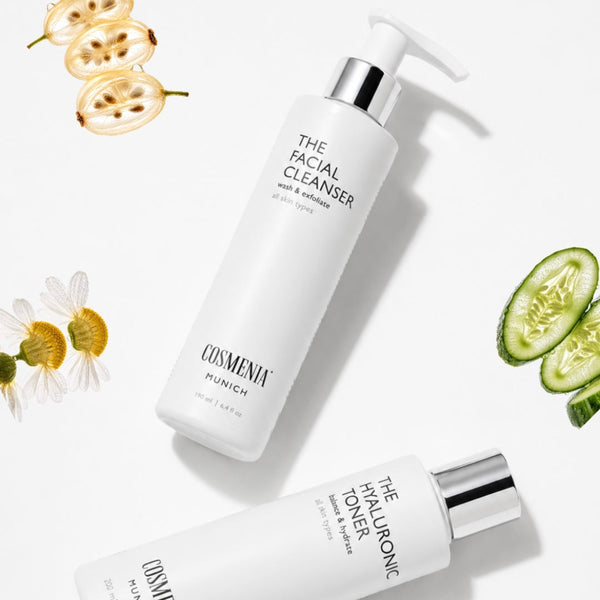
Toner in Winter: Does Your Skin Really Need One? What a Hyaluronic Toner Can Do
3 days ago
A toner is not an essential step. What a hyaluronic toner really does in winter, why it cannot replace your moisturiser and when alcohol-heavy toners do more harm than good.
Continue reading

Cleansing cloth vs. flannel: which is more hygienic and gentler on your skin?
3 days ago
Cleansing cloth or flannel? A critical look at hygiene, friction and the evidence – and how to use cloths on your face properly.
Continue reading

Sensitive skin in winter: what really soothes red, irritated skin?
5 days ago
Cold and heating air weaken the skin barrier – why sensitive skin reacts more strongly in winter, what the studies show and which care makes sense.
Continue reading

Night Care for Dry Skin: Shea Butter, Sea Buckthorn & Co. Put to the Test
6 days ago
Which ingredients really help dry skin overnight: shea butter works as a protective film, while the evidence for sea buckthorn is thin. A critical check with practical tips.
Continue reading

Removing Blackheads: Squeezing, Pore Strips or Acids? What the Evidence Shows
6 days ago
Blackheads cannot be removed for good, but they can be reduced: a critical check of squeezing, pore strips, acids and retinoids.
Continue reading

Alteromonas Ferment Extract in Winter: Does the Marine Ingredient Really Help Against Central Heating?
11 days ago
Alteromonas ferment extract in winter: what lab studies show about dry heated air, how well the marine ingredient is documented, and how to care for your skin during the heating season.
Continue reading

Lip Balm: Is Lip Care Really Addictive? What Studies and Dermatologists Say
12 days ago
Is lip balm addictive? Not physically – but habit and irritating ingredients can start a cycle. What is behind it and how to care for your lips sensibly in winter.
Continue reading

Coconut Oil on Your Face: Skincare Miracle or Pore-Clogger? What the Research Shows
12 days ago
Coconut oil is seen as an all-rounder, but it can clog pores if you are prone to blemishes. What studies on eczema and the skin barrier show – and when it makes sense on the face.
Continue reading

Jojobaöl in der Hautpflege: Was das flüssige Wachs wirklich kann – und was nicht
13 days ago
Jojobaöl ist chemisch ein flüssiges Wachs und dem hauteigenen Talg ähnlich. Gut belegt ist die Wirkung gegen Feuchtigkeitsverlust – Versprechen wie „reguliert die Talgproduktion“ sind dagegen kaum mit Studien untermauert.
Continue reading

Sleep deprivation and skin: what too little sleep really does to your skin barrier
15 days ago
What happens to your skin when you sleep too little? A critical look at studies on hydration, elasticity and barrier function – and on sensible skincare.
Continue reading

Hautpflege in der Schwangerschaft: Welche Wirkstoffe unbedenklich sind – und was Studien wirklich zeigen
Welche Pflege ist in der Schwangerschaft sinnvoll? Eine sachliche Einordnung zu Retinoiden, Säuren und ätherischen Ölen – und eine einfache, milde Routine.
Continue reading

Hyaluronsäure auf trockener Haut: Kann sie wirklich austrocknen? Der Mythos im Check
Hyaluronsäure bindet Wasser, liefert aber keines. Warum sie auf trockener Haut ohne Abdeckung austrocknen kann und wie du sie richtig anwendest.
Continue reading

Milchsäure in der Hautpflege: Sanftes AHA-Peeling und Feuchtigkeitsspender – was wirklich belegt ist
Milchsäure gilt als sanfteste AHA-Fruchtsäure: Sie peelt mild, bindet Feuchtigkeit und kann die Ceramid-Bildung fördern. Wir zeigen, was gut belegt ist, wo Anti-Aging-Versprechen übertreiben und wie du sie richtig anwendest.
Continue reading

Gesicht morgens nur mit Wasser waschen? Wann das reicht – und wann ein Reiniger sinnvoll ist
Reicht Wasser morgens wirklich aus? Es kommt auf den Hauttyp an: Trockene, empfindliche Haut kommt oft gut damit zurecht, ölige und unreine Haut meist weniger. Abends ist ein Reiniger fast immer sinnvoll.
Continue reading

Nachtcreme: Braucht die Haut nachts wirklich eine andere Pflege? Was die Studienlage zeigt
Regeneriert die Haut nachts wirklich – und braucht sie dafür eine eigene Nachtcreme? Wir zeigen, was Studien zum Tag-Nacht-Rhythmus der Haut belegen, wo Marketing übertreibt und wann eine reichhaltigere Abendpflege sinnvoll ist.
Continue reading

Mineralöl in Kosmetik: Wie bedenklich sind Paraffin und Vaseline wirklich?
Paraffinum liquidum, Petrolatum, Vaseline: Mineralöl in Kosmetik ist besser als sein Ruf, pflegt aber nicht aktiv. Was das BfR zu MOAH-Rückständen sagt und warum Naturkosmetik darauf verzichtet.
Continue reading

Polyglutaminsäure in der Hautpflege: Besser als Hyaluronsäure – oder nur ein neuer Hype?
Polyglutaminsäure (PGA) wird als Hyaluronsäure-Nachfolger mit 5.000-facher Wasserbindung beworben. Was der fermentierte Feuchtigkeitsspender wirklich kann, wie gut die Studienlage ist und warum er Hyaluronsäure eher ergänzt als ersetzt.
Continue reading

Waschbare Abschminkpads vs. Wattepads: Wie nachhaltig und hygienisch sind Mehrwegpads wirklich?
Waschbare Abschminkpads sparen Müll und Ressourcen – sind aber nur so gut wie ihr Material und ihre Pflege. Was Ökobilanz, Hygiene-Forschung und Tests über Mehrwegpads im Vergleich zu Wattepads wirklich zeigen.
Continue reading

Glycolipids & Glycosphingolipids: What These Ceramide Precursors Do for the Skin Barrier
Glycolipids and glycosphingolipids are ceramide precursors and building blocks of the skin barrier. What the research on supplements and creams really shows – and where the hype begins.
Continue reading

Große Poren verkleinern: Geht das wirklich? Ursachen und was die Studienlage zeigt
Poren lassen sich nicht dauerhaft verkleinern oder „schließen“ – aber sie können deutlich weniger sichtbar werden. Wir zeigen, was Talg, Alter und UV-Licht mit der Porengröße zu tun haben, welche Wirkstoffe belegt sind und wo Werbeversprechen übertreiben.
Continue reading

Milky Toner: What the K-Beauty Trend Really Does – and When a Hydrating Toner Is the Better Choice
Milky toners are the K-beauty trend of 2026. We explain what the milky texture really does, who it suits – and why a hydrating toner used in layers is the more flexible choice for most skin types.

Peptide in der Kosmetik: Welche gibt es und wirken sie wirklich?
Signalpeptide, Neuropeptide, Kupferpeptide: Wir zeigen, welche Peptide in Cremes und Seren stecken, wie sie in der INCI-Liste heißen und welche davon in Studien wirklich messbar wirken.
Continue reading

Sheabutter in der Hautpflege: Was das Pflanzenfett im Winter wirklich für trockene Haut leistet
Sheabutter gilt als Allzweckwaffe gegen trockene Winterhaut. Wir zeigen, was das Pflanzenfett nachweislich für die Hautbarriere leistet, wo die Studienlage dünn ist und für wen es weniger geeignet ist.
Continue reading

Mikroplastik in Kosmetik: Was das EU-Verbot regelt – und welche Lücken bleiben
Die EU-Verordnung 2023/2055 verbietet Mikroplastik in Kosmetik schrittweise bis 2035. Was schon gilt, welche Fristen kommen, warum flüssige Kunststoffe wie Silikone und Acrylate nicht erfasst sind und wie du synthetische Polymere in der INCI-Liste erkennst.
Continue reading

Hagebuttenkernöl in der Hautpflege: Narben-Wunder oder überschätztes Pflegeöl?
Hagebuttenkernöl gilt als natürliches Retinol und Narben-Wundermittel. Wir zeigen, was Studien tatsächlich belegen, warum die Retinsäure-Behauptung nicht hält und wie du das empfindliche Öl richtig verwendest.
Continue reading

Sheet Masks: Moisture Boost or Waste Problem? Sheet Masks Under Critical Review
Sheet masks promise plump, glowing skin in 20 minutes. We explain what the occlusion effect really does, why the effect usually doesn't last long, what waste footprint is behind the single-use trend and how to get the same moisture boost more sustainably.
Continue reading

Evening Primrose Oil in Skincare: What Gamma-Linolenic Acid Really Does for Dry Skin
Evening primrose oil is considered a classic for dry and irritated skin. We show what gamma-linolenic acid can do topically, why the research on atopic dermatitis is sobering and what matters in the formulation.
Continue reading

Hyaluronic Acid Molecular Sizes: Does Low-Molecular-Weight Hyaluronic Acid Really Penetrate Deeper?
High or low molecular weight: with hyaluronic acid, molecular size is often marketed as an efficacy promise. A critical look at penetration studies, the possible irritation potential of small fragments and why a combination usually makes more sense than isolated ‘deep action’.
Continue reading

Gua Sha & Face Yoga: What Facial Massage Really Does – and Where the Hype Begins
Gua sha and face yoga promise a lift without injections. What the few studies actually show, what's realistic and how to massage gently.
Continue reading

Adaptogens in Skincare: Ashwagandha, Reishi & Co. – Stress Helpers or Marketing Trend?
Adaptogens such as ashwagandha or reishi are supposed to bring stressed skin back into balance. What the extracts actually do, how thin the research is and what really helps stressed skin.
Continue reading

Drinking Collagen: What the Research on Oral Collagen Peptides Really Shows
Collagen powders and drinks promise firmer skin from within. We look at the current research and the regulatory situation on health claims, and show which skincare targets the skin's structure.
Continue reading

Dermaplaning: Useful Exfoliation or a Risk to the Skin Barrier?
Dermaplaning uses a fine blade to remove vellus hair and dead skin cells in one step. What really happens to the skin barrier, which promises the research doesn't support and what matters in aftercare.
Continue reading