Removing Blackheads: Squeezing, Pore Strips or Acids? What the Evidence Shows

In short
Blackheads are pores clogged with sebum and dead skin cells whose surface turns dark. They never disappear for good, but you can reduce them with mild acids, vitamin A care and consistent cleansing. Squeezing, pore strips and suction tools irritate the skin and, according to expert sources, usually give only short-term results.
More in our guide to blemish-prone skin.
Blackheads at a glance
- Technical term: open comedones (blackheads); closed comedones are called whiteheads
- Cause: sebum and horny cells clog the pore, the surface oxidises and turns dark
- Well documented: topical retinoids are strongly recommended in the American Academy of Dermatology (AAD, 2024) acne guideline
- Partly documented: salicylic acid and azelaic acid, only conditionally recommended in the guideline, with low certainty of evidence
- Not documented: that pore strips or suction tools clean or shrink pores permanently
- Timeframe: changes usually show only after several weeks of consistent care
What are blackheads?
Blackheads (comedones) are clogged hair follicles. Sebum and dead skin cells collect in the pore. If the opening is exposed, the plug oxidises in the air and turns dark: an open comedone. If the pore stays closed, a whitish whitehead forms. Not every dark dot is a blackhead: sebaceous filaments, thin grey to yellowish threads of sebum in the pores, are part of normal skin and refill after removal.
Why sebum production and keratinisation interact in blemish-prone skin is also explained in our article Breakouts despite skincare.
Squeezing, pore strips & co.: what makes sense
Squeezing
Squeezing removes the sebum but bruises the skin. Tiny injuries let bacteria in and can cause inflammation and scars. If done at all, extraction belongs in professional hands.
Pore strips and suction tools
Strips pull sebum, hairs and skin flakes off the surface. Because pores refill, you would have to use them regularly, which irritates the skin. Suction tools can cause redness and small bruises and worsen deeper inflammation. The effect is short-lived and no lasting effect is documented.
Critical view: what the evidence shows
The 2024 AAD guideline recommends topical retinoids, i.e. vitamin A derivatives, as the basis of acne treatment; they promote cell renewal and prevent clogged pores. For salicylic acid and azelaic acid the recommendation is weaker because study quality is lower. For purely cosmetic use: ingredients in skincare are usually dosed lower than in medicines and work more gently. If you have many inflamed spots, nodules or scarring, see a dermatologist. Claims such as "clean pores forever" do not hold up.
What really helps day to day
Cleanse gently but regularly
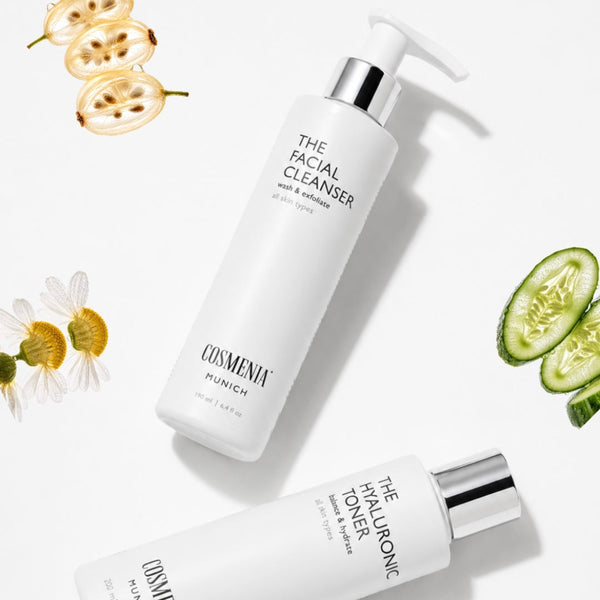
Mild cleansing morning and evening removes excess sebum without stressing the skin barrier. The Facial Cleanser contains AHA fruit acids that gently smooth the skin surface. How AHA compares with BHA is covered in our article on salicylic acid.
Start acids carefully
Begin peels with AHA, mandelic acid or BHA once or twice a week and increase only if your skin tolerates it. More in Mandelic acid for blemish-prone skin.
Do not forget the barrier
Constant cleansing and peeling easily leads to a cycle of dryness and even more sebum. Light moisturising care such as The Glowy Gel with aloe vera and zinc keeps skin balanced. Our article on double cleansing compares cleansing routines.
Our recommendation
For a coordinated routine against blemishes, the Clear Skin Set with cleanser, toner and gel is a good fit. As a single product, The Facial Cleanser (COSMOS Natural certified) suits daily use.
FAQ: blackheads
Can blackheads be removed permanently?
No. Pores keep refilling with sebum. Regular, mild care can clearly reduce blackheads and prevent new ones.
Are pore strips harmful?
They are not dangerous but irritate the skin with frequent use. A lasting effect is not documented.
How do blackheads differ from sebaceous filaments?
Blackheads are dark, firm plugs of oxidised sebum. Sebaceous filaments are pale, soft threads of sebum that are part of normal skin.
Which ingredient works best against blackheads?
Retinoids are best documented. Salicylic acid, azelaic acid and AHA can support. Which one suits you depends on skin type and tolerance.
When should I see a dermatologist?
With many inflamed spots, painful nodules or scarring. Cosmetics alone are usually not enough then.
Conclusion
Blackheads cannot be magicked away once and for all, but gentle cleansing, careful acids and a stable skin barrier keep them well under control. Squeezing and strips give short-term looks, but often more irritation in the long run. A coordinated routine such as the Clear Skin Set supports you.
Sources
- Reynolds RV et al.: Guidelines of care for the management of acne vulgaris. Journal of the American Academy of Dermatology, 2024; 90(5): 1006.e1–1006.e30
- apotheke adhoc, PTA live: Talgfilamente – was taugen die Trends? (article on pore strips, suction tools, acids and retinoids)
Last updated: November 2026
Want to see more from COSMENIA in your Google search results? Add us as a preferred source.


Comments