
In short
Fine lines, loss of moisture and pigmentation spots share one main cause: UV radiation. That’s why daily sun protection is the most effective anti-ageing step. Moisture, lipids and antioxidants come on top. That’s exactly how The Glow Routine is built: gentle cleansing, hyaluronic acid in the toner, alteromonas ferment and antioxidants in the serum, sea buckthorn, jojoba oil and vitamin E in the Day Cream – complemented by The Sun Kiss as mineral sun protection. Pigmentation spots that change, grow or bleed should be checked by a dermatologist.
As a beautician, I’m often asked for the one miracle product against wrinkles. Honestly: it doesn’t exist. What makes a visible difference is a consistent basis of sun protection, moisture and good care – and patience. In this guide I’ll show you which ingredients are in our Glow routine, what they can do and where their limits are.
Why skin ages and pigmentation spots form
Over the years the skin produces less collagen and fewer lipids, loses moisture more easily and renews itself more slowly. UV light has the biggest external influence: it breaks down collagen and stimulates the pigment cells. This leads to pigmentation spots, an uneven complexion and fine lines earlier. Hormones, for example during pregnancy or menopause, can also encourage pigmentation spots.
The basis: sun protection
Without daily sun protection, any anti-ageing care fizzles out. Pigmentation spots darken again quickly with UV exposure. The Sun Kiss SPF 30 is a mineral sunscreen and belongs at the end of your morning routine – in winter and on cloudy days too.
The ingredients in The Glow Routine
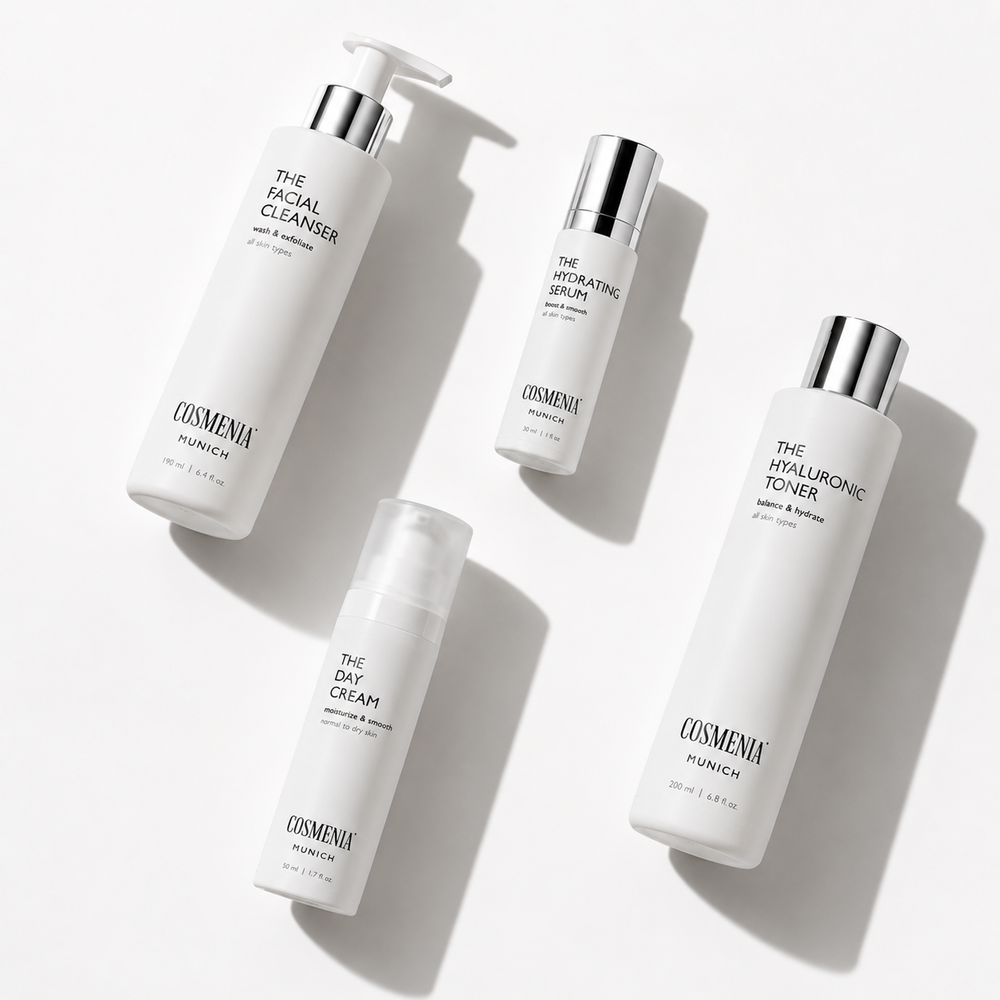
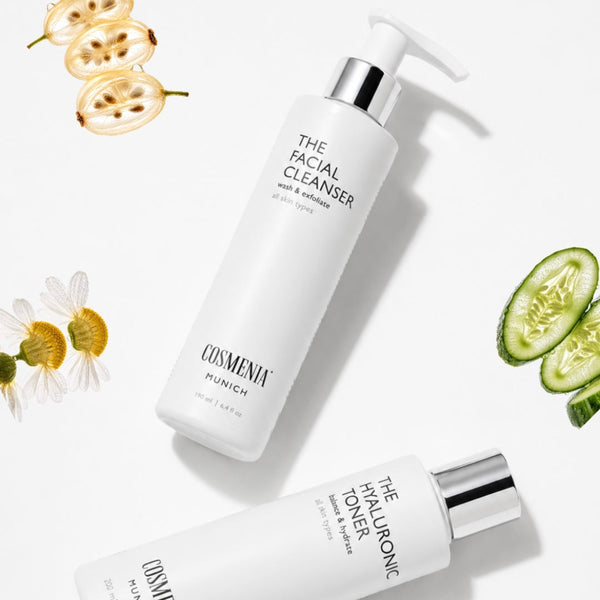
Step 1: The Facial Cleanser – gentle cleansing
Coco-Glucoside and Cocamidopropyl Betaine cleanse gently, while glycerin and plant lipids (glycolipids) prevent the skin from drying out. A small amount of lactic acid supports a gentle exfoliating effect – for a fresher complexion.
Step 2: The Hyaluronic Toner – moisture as the basis
Glycerin, betaine, sodium PCA and sodium hyaluronate give moisture back to the skin straight after cleansing. Well-hydrated skin looks plumper, and fine dryness lines are less noticeable. Organic chamomile flower and cucumber fruit extract give a fresh, calm skin feel.
Step 3: The Hydrating Serum – moisture and antioxidants
The serum combines hyaluronic acid in two molecular sizes (sodium hyaluronate and hydrolysed hyaluronic acid) with aloe vera leaf juice, rose flower water and alteromonas ferment extract. Antioxidants from black tea and blueberry extract, vitamin E and a vitamin C ester help protect the skin from free radicals – a useful complement to sun protection. Plant lipids (glycosphingolipids and glycolipids) and jojoba oil make the skin supple.
Step 4: The Day Cream – care and suppleness
Jojoba oil, blueberry seed oil and plant lipids strengthen the lipid layer, which gets thinner over the years. Sea buckthorn extract, vitamin E and black tea and blueberry extract are antioxidant, while hyaluronic acid and glycerin keep moisture in the skin. A touch of mica adds a soft glow. The scent comes from natural essential oils.
All products are Ecocert-certified natural cosmetics with 98–99 % ingredients of natural origin: cleanser and toner according to COSMOS Natural, serum and Day Cream according to COSMOS Organic.
What the ingredients can do – and what they can’t
- Moisture and lipids make the skin look visibly plumper and smoother, especially with dryness lines. Deep wrinkles won’t disappear.
- Antioxidants such as vitamin E, tea and blueberry extract complement sun protection but don’t replace it.
- For pigmentation spots, The Glow Routine contains no brightening actives. It gives a fresher, more even-looking complexion – the most important step against new and darkening spots remains daily sun protection. You’ll find an honest assessment of targeted actives below.
Allow six to eight weeks before you see changes in your complexion. Pigmentation spots often need even more patience.
More about the individual ingredients on the Beauty Blog:
- Vitamin E (tocopherol)
- Vitamin C in natural cosmetics
- Sea buckthorn in skincare
- Alteromonas ferment extract
- Plant-based hyaluronic acid
- Aloe vera in skincare
- Hydrosols and flower waters
How to use The Glow Routine
- Cleanse (morning and evening): lather The Facial Cleanser with a little water, massage in gently and rinse with lukewarm water.
- Tone: apply The Hyaluronic Toner to slightly damp skin and pat it in.
- Serum: pat in a small amount of The Hydrating Serum.
- Care: apply The Day Cream to face, neck and décolleté.
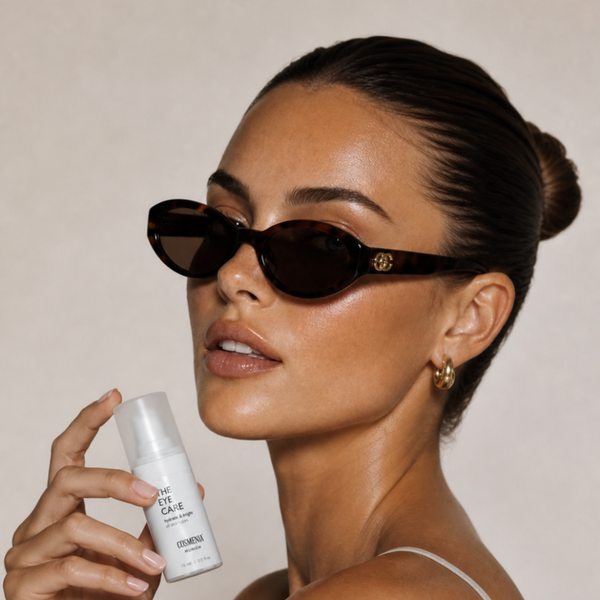
Nia’s tip: In the morning, add The Sun Kiss as the last step. In the evening, The Beauty Sleep Cream & Mask replaces the Day Cream, and The Eye Care takes care of the eye area. Don’t forget your neck and the backs of your hands – they often show age first.
Well-researched anti-ageing actives in check
If you’d like to add targeted actives to your routine, here is an honest assessment:
- Retinal vs. retinol and the new EU rules
- Bakuchiol as a retinol alternative
- Ferulic acid: stabiliser for vitamins C and E
Actives for pigmentation spots in check
- Kojic acid and the new EU limits
- Alpha-arbutin instead of hydroquinone
- Tranexamic acid for pigmentation
- Azelaic acid
Trends in a critical check
- PDRN: hype or breakthrough?
- Exosomes in skincare
- Peptides: Botox alternative or marketing?
- Collagen boosters in natural cosmetics
- Red light therapy and LED masks
- Snail mucin in check
Mature skin and the eye area
Frequently asked questions about anti-ageing and pigmentation
When does anti-ageing care make sense?
Daily sun protection is worthwhile at any age. A routine with moisture, lipids and antioxidants is a good basis from your mid-20s – targeted actives such as retinal usually come later.
Can The Glow Routine remove pigmentation spots?
No, it can’t remove pigmentation spots. It gives a fresher complexion, and with daily sun protection you prevent spots from darkening. For targeted brightening there are special actives or treatments at the dermatologist.
Do I need sun protection in winter too?
Yes. UVA radiation, which contributes most to skin ageing, is present all year round and passes through clouds and window glass.
Can I add retinal or vitamin C serums?
Yes. Introduce them slowly, ideally in the evening after cleansing, and don’t combine several strong actives at once. Daily sun protection is then especially important.
When should I see a dermatologist about pigmentation spots?
If a spot changes in shape, colour or size, itches, bleeds or appears newly – and in general once a year for a skin cancer check.
Care for every day
The complete routine from this guide is The Glow Routine with The Facial Cleanser, The Hyaluronic Toner, The Hydrating Serum and The Day Cream – cheaper as a set than individually. Add The Sun Kiss SPF 30 for the day and The Eye Care for the eye area. You’ll find all products for this skin type in the mature skin collection. Read more about the skin’s protective layer in the skin barrier guide.