
Peptides in Natural Cosmetics: A Botox Alternative or a Marketing Term?

 The short answer
Peptides are short chains of amino acids used in cosmetics as signal, carrier or neuropeptides. Neuropeptides such as Argireline theoretically inhibit the same muscle contraction as Botox – but topically, much more weakly and with thinner research. They are not suitable as a sole Botox alternative, but they can certainly complement an anti-ageing routine.
What are peptides in natural cosmetics?
Peptides are short chains of amino acids – the building blocks that proteins such as collagen and elastin are also made of. Three categories mainly appear in creams and serums: signal peptides, which tell the skin to produce more collagen; carrier peptides, which deliver trace elements such as copper to the cells; and neuropeptides, which specifically intervene in the communication between nerve and muscle. Only neuropeptides are behind the headline ‘plant-based Botox alternative’, above all acetyl hexapeptide-8, known under the brand name Argireline. For an overview of all four peptide groups and the research behind them, read Peptides in Cosmetics: Which Types Exist and Do They Really Work?
The Botox comparison: how is it supposed to work?
Botulinum toxin blocks the release of acetylcholine at the motor end plate and thus completely paralyses the muscle – the wrinkle disappears because the muscle underneath no longer contracts. Argireline mimics a fragment of the SNAP-25 protein, which is involved at exactly the same point, and is said to dampen acetylcholine release rather than stop it completely. So the mechanism is related, but the intensity isn't: whereas Botox is an injection and a complete muscle block lasting weeks, Argireline remains a mild, superficial reduction in contraction.
What does the research show – critically assessed?
Manufacturer studies report a reduction in wrinkle depth of up to 30 percent after around 30 days for 10 percent Argireline solutions, mainly on the forehead and crow's feet. That sounds impressive, but it has two decisive catches that tend to get lost in marketing language.
First, the penetration problem: an in-vitro study on skin permeability found that over 99 percent of the applied Argireline doesn't reach the dermis at all – where the neuromuscular end plate actually lies. Only a tiny fraction was detected in the living epidermis at all. Whether enough of the ingredient reaches the actual target structure is therefore anything but clear.
Second, the concentration gap: the efficacy studies worked with around 10 percent Argireline. In finished cosmetic products, however, the ingredient is typically orders of magnitude lower for safety and cost reasons – regulatory bodies already consider levels well below one percent to be sufficiently safe. Whether the very low doses common on the market achieve a measurable effect at all has hardly been investigated independently. Reputable brands should therefore disclose concentration and the study basis rather than simply advertising with the word ‘Botox alternative’.
The picture is different for signal peptides that are meant to stimulate the body's own collagen production: here, several independent studies actually show measurable improvements in skin density and wrinkle depth after eight to twelve weeks of regular use – but via a completely different, slower mechanism than neuropeptides.
Adding peptides to your routine the smart way
Barrier first, active ingredient second
Peptides only work if the skin barrier is intact. The Day Cream provides the skin with plant lipids and sea buckthorn, creating the foundation that active ingredients need in order to arrive at all.
Regeneration instead of trend terms
If you'd rather rely on regeneration than on the weak neuropeptide effect, The Hydrating Serum with Alteromonas ferment extract offers an ingredient obtained through fermentation that provides moisture and supports the skin's regeneration.
Moisture as the basis for visibly smoother skin
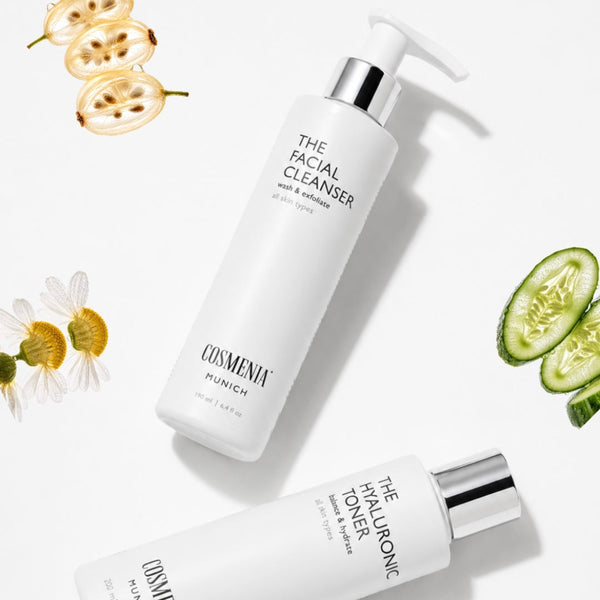
Regardless of the peptide mechanism, well-hydrated skin makes fine lines appear less pronounced. The Hyaluronic Toner supports this with hyaluronic acid in several molecular sizes as a complement to the rest of your routine.
Frequently asked questions about peptides in cosmetics
Can a peptide serum really replace Botox?
No. Botox paralyses the muscle specifically and completely; a peptide serum can at best slightly weaken the contraction. For strong expression lines, the effect remains cosmetic and is not medically comparable.
Are peptides permitted in natural cosmetics?
Yes, common cosmetic peptides such as acetyl hexapeptide-8 or signal peptides are considered cosmetic active ingredients and are classified as safe at the usual low concentrations.
How long does it take for peptides to show visible effects?
Signal peptides that stimulate collagen formation usually need eight to twelve weeks of regular use. Neuropeptide effects are advertised earlier, but are less well documented overall.
Conclusion
Peptides aren't a marketing term without any substance, but they're not a replacement for Botox treatment either. Neuropeptides such as Argireline have a plausible but weakly documented and strongly dose-dependent effect; signal peptides for collagen formation are on more solid scientific ground. If you'd rather rely on a well-founded anti-ageing routine than on big promises, the Hydra Barrier Repair Set offers a combination of barrier-strengthening and regenerating ingredients with a comprehensible mode of action.
Want to see more from COSMENIA in your Google search results? Add us as a preferred source.


Comments