
Bakuchiol as a Retinol Alternative: What the Plant-Based Ingredient Really Delivers
 The short answer
Bakuchiol is a plant-based ingredient from the babchi plant that triggers effects similar to retinol without being structurally related to it. Studies show comparable results for wrinkles and dark spots – with considerably less irritation. Still, it's not a 1:1 replacement: the long-term data is narrower than for retinol.
What is bakuchiol?
Bakuchiol is obtained from the seeds of the babchi plant (Psoralea corylifolia), which has been used in Ayurvedic medicine for centuries. Chemically, bakuchiol has nothing to do with retinol – it belongs to a different class of substances. Interestingly, it nevertheless activates gene expression patterns in the skin similar to retinol and can thereby achieve comparable effects on collagen formation and cell renewal.
What does a direct comparison with retinol show?
A randomised, double-blind study with 44 participants compared 0.5% bakuchiol (twice daily) with 0.5% retinol (once daily) over twelve weeks. The result: both ingredients significantly reduced wrinkle depth and hyperpigmentation, with no statistically relevant difference between the groups. The decisive difference showed up in tolerability – the retinol group reported scaling and stinging considerably more often.
Important for context: this is a single, comparatively small study. Further independent, larger-scale and long-term comparative studies would be needed to really confirm the results – bakuchiol doesn't yet match retinol's decades-long evidence base.
Why is bakuchiol better tolerated?
Unlike retinol, bakuchiol doesn't increase the skin's sensitivity to UV and can therefore also be used in the morning. It is also chemically more stable in light, heat and oxygen – retinol breaks down comparatively quickly under these conditions and loses efficacy if stored or formulated incorrectly.
Limits and open questions
‘Plant-based’ doesn't automatically mean ‘non-irritating’: bakuchiol can also trigger contact allergies in rare cases. In addition, the concentration and quality of the extract vary greatly between products, which means study results can only partly be transferred to individual finished products. If you're looking for the maximum, best clinically proven anti-ageing effect, retinol is still the more likely choice – if you prioritise tolerability, bakuchiol is a good option.
Adding bakuchiol to your routine the smart way
The basis: cleanse gently instead of irritating
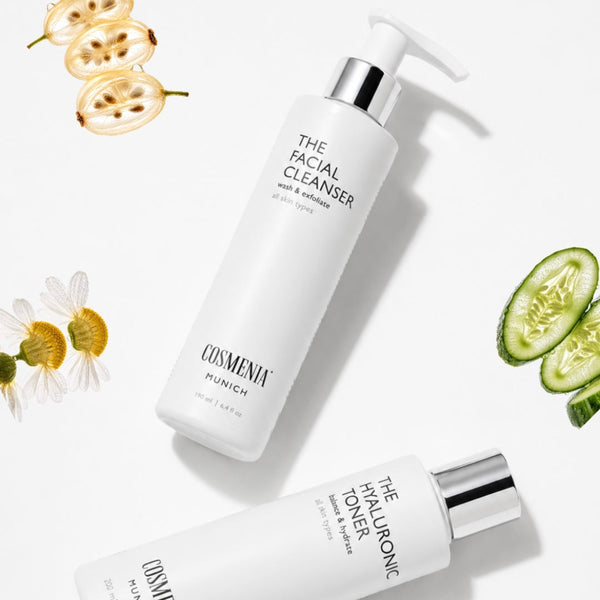
Active ingredients such as bakuchiol need an intact foundation. The Facial Cleanser cleanses with mild AHA fruit acids without attacking the acid mantle – the basic requirement for active ingredients not to cause extra irritation afterwards.
Strengthen the barrier instead of just stacking actives
Since retinol alternatives such as bakuchiol stimulate skin renewal, the skin also benefits from plant lipids such as those in The Day Cream – they support the barrier while the skin gets used to the new ingredient.
Frequently asked questions about bakuchiol
Can I use bakuchiol during pregnancy?
Bakuchiol is considered better tolerated than retinol, which should be avoided during pregnancy. However, an official, broad approval or comprehensive safety studies for pregnancy are still lacking – if in doubt, check with your doctor first.
Can you combine bakuchiol and retinol?
In principle yes, but it's rarely necessary – most people choose one of the two options depending on skin tolerance and personal goals.
How quickly does bakuchiol show results?
As with retinol, it takes several weeks: the first visible effects on skin texture and refinement usually appear after 8–12 weeks of consistent use.
Conclusion
Bakuchiol isn't a marketing bubble, but a comparatively well-studied, better-tolerated alternative to retinol – with the caveat that the evidence base is (still) narrower. If you have sensitive skin or don't tolerate retinol, it's a sensible option. Combined with a barrier-strengthening routine such as the Hydra Barrier Repair Set, you can get the best of both approaches.
Want to see more from COSMENIA in your Google search results? Add us as a preferred source.


Comments