
In short
The skin barrier is the outermost layer of the skin, the stratum corneum. It keeps moisture in and irritants out. When it’s weakened, the skin feels tight, stings or flakes. You strengthen it mainly through gentle cleansing, fewer irritants and care with moisture and lipids. That’s exactly how the Hydra Barrier Repair Set is built: gentle sugar-based surfactants in the cleanser, hyaluronic acid in two molecular sizes and alteromonas ferment in the serum, jojoba oil, sea buckthorn and plant lipids in the Day Cream. Eczema or persistently inflamed skin should be treated by a dermatologist.
I see it in my treatment room all the time: skin that feels tight, stings or suddenly reacts to everything almost always has an overwhelmed barrier – usually from too much cleansing, too many products or too frequent peels. The good news: with a calm, consistent routine it recovers. In this guide I’ll show you which ingredients are in our barrier routine, what they can do and where their limits are.
How the skin barrier works
The stratum corneum works like a wall: the skin cells are the bricks, the skin’s own lipids the mortar. Added to this is the natural moisturising factor, which binds water in the cells. If mortar or moisture is missing, more water evaporates and irritants penetrate more easily. The skin feels dry, rough and sensitive.
- Strengthening the skin barrier: the basics
- Damaged skin barrier: causes, symptoms and care
- Permeable skin barrier: what EU studies show
- Microbiome care: pre-, pro- and postbiotics
Typical signs and what’s behind them
Tightness after washing, stinging when applying cream, dry patches or sudden redness are classic signs of a weakened barrier. Common triggers are harsh cleansers, hot water, too many actives at once, heated indoor air and cold.
- Skin feels tight after washing
- Skin stings when applying cream
- Dry patches on the face
- Combination skin: shiny T-zone, tight cheeks
- Skincare in autumn
- Skin during menopause
The ingredients in the Hydra Barrier Repair Set
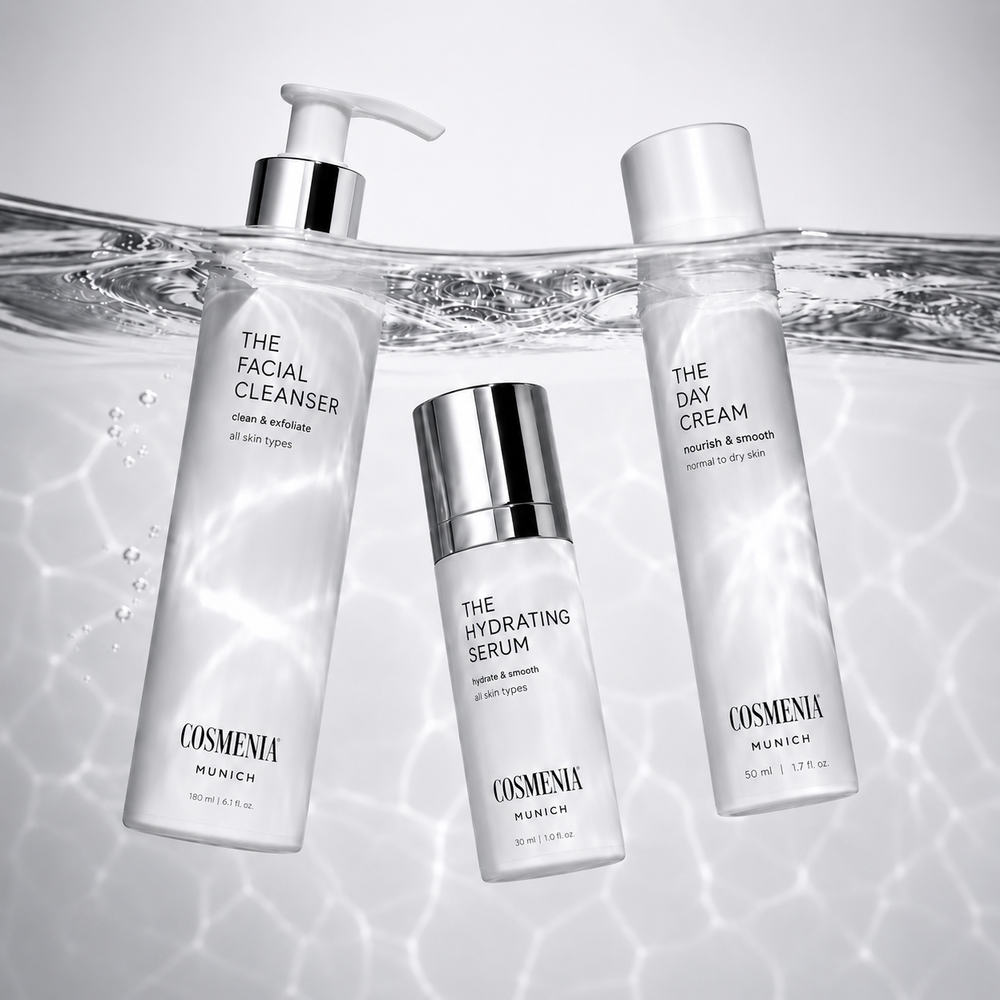
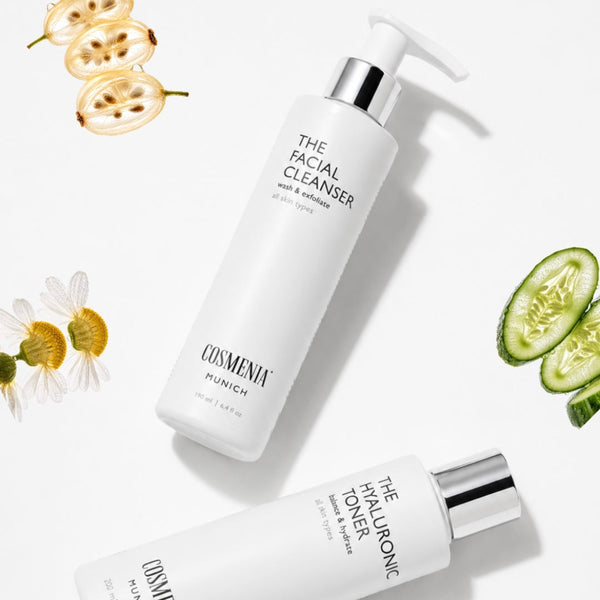
Step 1: The Facial Cleanser – cleansing without drying out
Coco-Glucoside and Cocamidopropyl Betaine are mild surfactants derived from sugar and coconut. They remove dirt and sebum without stripping the skin of lipids unnecessarily. Glycerin and plant lipids (glycolipids) remain after rinsing so the skin doesn’t feel tight. Added to this are organic lavender flower water and white currant extract, plus a small amount of lactic acid for a skin-friendly pH.
Step 2: The Hydrating Serum – moisture deep into the stratum corneum
The serum’s base is organic aloe vera leaf juice, combined with rose flower water. Hyaluronic acid comes in two forms: sodium hyaluronate forms a moisture film on the surface, while smaller hydrolysed hyaluronic acid supplies the upper layers of the stratum corneum. Glycerin and sodium PCA bind additional water. Alteromonas ferment extract is a marine ferment that supports the skin when it’s stressed by dryness. Plant lipids (glycosphingolipids and glycolipids) and a little jojoba oil add to the mortar of the skin wall. Black tea and blueberry extract, vitamin E and a vitamin C ester provide antioxidants.
Step 3: The Day Cream – lipids and protection for the day
The Day Cream also uses aloe vera leaf juice as its base. Jojoba oil and caprylic/capric triglyceride make the skin supple without feeling greasy. Plant lipids (glycosphingolipids and glycolipids), blueberry seed oil and sea buckthorn extract support the lipid layer. Glycerin, sodium PCA and hyaluronic acid in two forms keep moisture in the skin, while vitamin E, black tea and blueberry extract are antioxidant. The fresh scent comes from natural essential oils.
All three products are Ecocert-certified natural cosmetics with 98–99 % ingredients of natural origin: the cleanser according to COSMOS Natural, serum and Day Cream according to COSMOS Organic.
What the ingredients can do – and what they can’t
- Humectants such as glycerin, sodium PCA and hyaluronic acid bind water in the stratum corneum. The skin quickly feels less tight – but the effect only lasts once the lipids are right too.
- Plant lipids and oils add to the lipid layer and reduce water loss. They aren’t identical to the skin’s own lipids, but support them.
- Alteromonas ferment and antioxidants are additions for stressed skin. The most important step remains reducing irritation: gentle cleansing, fewer products, no overly frequent peels.
Allow around four weeks for the barrier to recover noticeably – that’s roughly how long one skin renewal cycle takes.
More about the individual ingredients on the Beauty Blog:
- Glycerin in skincare
- Plant-based hyaluronic acid
- Alteromonas ferment extract
- Fermented actives in skincare
- Sea buckthorn in skincare
- Aloe vera in skincare
- Vitamin E (tocopherol)
- Hydrosols and flower waters
How to use the Hydra Barrier Repair Set
- Cleanse (morning and evening): lather The Facial Cleanser with a little lukewarm water, massage in gently and rinse. Don’t rub – just pat your face dry.
- Serum: apply a small amount of The Hydrating Serum to slightly damp skin and pat it in.
- Care: apply The Day Cream to face and neck.
Nia’s tip: In the morning, The Sun Kiss belongs at the end as the last step. In the evening you can use The Beauty Sleep Cream & Mask instead of the Day Cream – it’s richer and supports the skin overnight. Leave out peels and new actives until your skin has calmed down.
Other actives for the skin barrier in check
Many actives promise barrier benefits. Here is an honest assessment:
- What are ceramides anyway?
- Ceramide NP vs. plant ceramides
- Squalane
- Urea
- Panthenol (provitamin B5)
- Ectoin
- Beta-glucan
- Allantoin
- Bisabolol from chamomile
- Centella asiatica (cica)
- Extra hyaluronic acid serum: worth it?
Routine tips and trends in check
- The right order of skincare
- Skinimalism: less is often more
- Double cleansing: useful or unnecessary?
- Micellar water: gentle or irritating?
- Mechanical vs. chemical exfoliation
- AHA fruit acids at home
- Skin cycling in check
- Slugging: who is it for?
- Skin flooding: hype or clever boost?
Frequently asked questions about the skin barrier
How do I recognise a weakened skin barrier?
Typical signs are tightness after washing, stinging when applying skincare, rough or flaky patches and skin that suddenly reacts to products it used to tolerate.
How long does it take for the skin barrier to recover?
You’ll often feel first improvements after a few days. For the barrier to really stabilise, care for your skin gently and consistently for around four weeks.
Can I use peels if my barrier is weakened?
Better not. Pause acids, retinoids and scrubs until your skin is calm, then reintroduce them slowly and not daily.
Is the set suitable for sensitive skin?
The formulas are gentle. However, the serum and the Day Cream contain natural fragrance from essential oils. If your skin is very sensitive, test new products on a small area first, for example along the jawline.
When should I see a dermatologist?
If you have weeping, very itchy or inflamed patches, suspect eczema or atopic dermatitis, or if your skin doesn’t improve after a few weeks of gentle care.
Care for your skin barrier
The complete routine from this guide is the Hydra Barrier Repair Set with The Facial Cleanser, The Hydrating Serum and The Day Cream – cheaper as a set than individually. You’ll also find matching products in the dry skin and sensitive skin collections. Read more about blemishes and skin ageing in the blemish-prone skin guide and the anti-ageing & pigmentation guide.