
AHA Fruit Acids at Home: Gentle Exfoliation or a Risk to the Skin Barrier?

Note: image partly or fully created with AI.
The short answer
At low concentrations (5–10%), AHA fruit acids such as glycolic or lactic acid gently loosen dead skin cells and can improve complexion and texture. At too high a concentration, with too frequent use or in combination with other active ingredients, however, the risk of a weakened skin barrier and increased sun sensitivity rises. At home: less is more, and sun protection is a must.
What are AHA fruit acids and how do they work?
AHA stands for alpha hydroxy acids – a group of water-soluble acids that includes glycolic acid (from sugar cane), lactic acid (from fermented milk, among other sources, or plant-derived), citric acid and mandelic acid. They loosen the bonds between dead skin cells in the top layer of the skin, speeding up the natural shedding process. The result: a more even complexion, finer-looking pores and better absorption of subsequent skincare products.
As the smallest AHA molecule, glycolic acid penetrates most strongly and is considered particularly effective, but also more irritating. Lactic acid is larger, penetrates more slowly and also has a slight moisture-binding effect, which often makes it better tolerated by more sensitive skin.
Home use vs. professional treatment: concentration is key
The main difference between a peel at a beauty salon or dermatology practice and a product for home use lies in the concentration and pH. Professional treatments use 20–70% acid at a low pH and are applied and neutralised by trained staff. Products for home use are much lower in dose: usually 5–10% AHA, buffered to a pH of around 3.5–4.0 to limit the potential for irritation.
The EU Cosmetics Regulation (EC) No 1223/2009 does not set a binding maximum concentration for glycolic and lactic acid – unlike, for example, salicylic acid. Here, the cosmetics industry follows recommendations from the EU Commission's Scientific Committee on Consumer Safety (SCCS) and Cosmetics Europe guidelines, which recommend a maximum free acid content of around 6% at a pH above 3.5 for leave-on products, together with a warning about increased sun sensitivity. These recommendations are not legally binding, but reputable manufacturers generally comply with them.
A critical look: where AHA peels at home can endanger the skin barrier
AHA fruit acids are often presented in marketing as fundamentally gentle and suitable for every skin type. The research paints a more nuanced picture: several dermatological studies show that too frequent or too highly concentrated use can attack the lipid layer of the stratum corneum and measurably weaken the barrier function – recognisable by increased transepidermal water loss (TEWL). Those most affected are people who use several active ingredients at the same time, for example AHA in combination with retinoids or high-concentration vitamin C, without giving the skin recovery breaks.
A second, often underestimated point: AHAs have been shown to increase the skin's UV sensitivity, even after a cleanser has been rinsed off. Without consistent sun protection, the risk of dark spots and premature skin ageing rises – the opposite of what many users want to achieve with an exfoliant. Independent long-term studies on daily home use over several years are also rare; most available data comes from short, manufacturer-affiliated studies lasting a few weeks. Caution is advisable for people with a previously damaged skin barrier, rosacea or active acne inflammation, as AHAs can put additional strain on irritated skin.
In practice: how to add AHA to your routine safely
A gentle start via cleansing
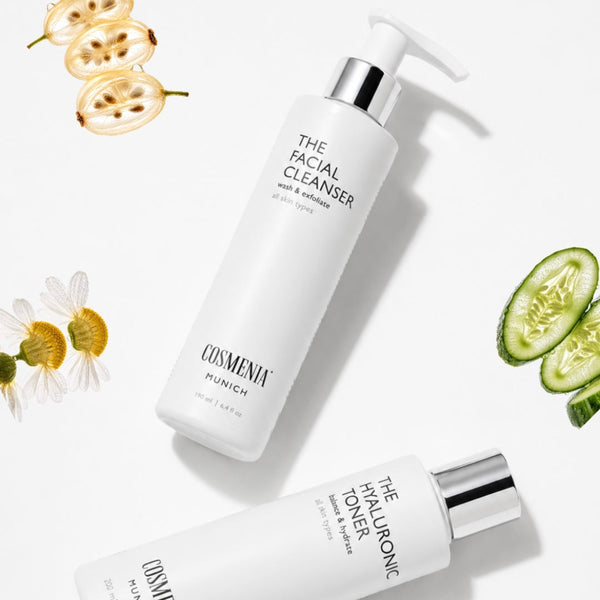
Instead of starting straight away with an intensive leave-on exfoliant, a cleanser with low-dose AHA fruit acids is a lower-risk start, as contact with the skin is only brief. Cosmenia's The Facial Cleanser combines gentle AHA fruit acids with a creamy, non-drying texture, making it a good first step to test tolerability.
Actively support the barrier
If you add AHAs to your routine, you should also invest specifically in your skin barrier to offset the additional exfoliation stimulus. The Day Cream with plant lipids and sea buckthorn provides exactly the lipids that are used up more quickly by regular exfoliation.
Sun protection isn't an extra but a prerequisite
Since AHAs increase UV sensitivity, daily SPF isn't optional but a basic requirement of any exfoliation routine. The mineral The Sun Kiss SPF 30 protects without further irritating the skin and should never be missing on any day you use AHAs – even when it's cloudy.
Frequently asked questions about AHA fruit acids
How often should I use AHA products at home?
For beginners, a slow start with 1–2 applications per week is recommended. Only once your skin tolerates this well can you gradually increase the frequency – for leave-on products, usually no more than every other day.
Can I combine AHA with retinol or vitamin C?
It's possible in principle, but not at the same time in the same routine. Both ingredients further increase the potential for irritation. It makes more sense to spread AHA and retinol across different days or times of day and let the skin regenerate in between.
How can I tell if my skin barrier has suffered from too much AHA?
Typical signs are persistent redness, a feeling of tightness even without application, increased sensitivity to otherwise well-tolerated products and a rough rather than smoother skin feel. In this case, a break from active ingredients and a focus on barrier-strengthening care help.
Conclusion
At the right dose, AHA fruit acids are a scientifically well-founded ingredient for a more even complexion – but not one to use thoughtlessly at high frequency or concentration. The balance between a gentle exfoliating effect and a weakened skin barrier is narrow, especially at home without expert guidance. If you start slowly, support your skin with plant lipids and sea buckthorn such as in The Day Cream and use sun protection consistently, you can benefit from AHAs without risking your skin barrier.
Want to see more from COSMENIA in your Google search results? Add us as a preferred source.


Comments