
Panthenol (Provitamin B5): What the All-Rounder Really Does for the Skin Barrier

Note: image partly or fully created with AI.
The short answer
Panthenol (provitamin B5) binds moisture in the stratum corneum, reduces the skin's water loss and has an anti-inflammatory effect. Its basic effect is well documented by decades of research. However, many percentages on wound healing come from studies with high-dose pharmaceutical ointments and cannot be transferred directly to cosmetic creams.
What is panthenol?
Panthenol is the stable alcohol form of pantothenic acid, better known as vitamin B5. On the skin or in the hair, it is enzymatically converted into pantothenic acid, which the body needs, among other things, to synthesise coenzyme A and thus for numerous metabolic processes in skin cells. Cosmetic products mostly use D-panthenol (dexpanthenol), the biologically active form. The ingredient became known mainly through wound and healing ointments such as Bepanthen, but it is now also a firm part of skincare in creams, serums and toners.
How does panthenol work on the skin?
Panthenol works on several levels at once. As a humectant, it binds water in the stratum corneum and has been shown to reduce transepidermal water loss. At the same time, the resulting pantothenic acid stimulates the synthesis of skin lipids, especially ceramides, which are essential for an intact barrier. Cell studies also show an inhibiting effect on the transcription factor NF-κB, which controls the production of pro-inflammatory messengers – which explains the soothing effect on red, irritated skin. In wound models, panthenol also promotes the proliferation of fibroblasts and keratinocytes, speeding up re-epithelialisation.
What does the research show, critically assessed?
Panthenol is one of the longest- and best-researched ingredients in cosmetics – unlike many newer trendy ingredients, its basic effect on moisture binding and barrier function is well documented by independent studies and decades of clinical experience. However, it's worth putting into critical context how often wound healing data from pharmaceutical research is carried over unchanged into cosmetics marketing. Studies on accelerated re-epithelialisation or reduced scarring come mainly from studies with 5 percent dexpanthenol ointments after laser treatments or surgical procedures – a completely different scenario from a 1 to 2 percent concentration in an everyday cream on intact skin. The frequently cited claim that panthenol reduces water loss ‘by 10 to 15 percent’ also usually goes back to individual manufacturer studies with specific formulations and cannot be applied across the board to every product containing panthenol. For everyday skincare: the direction of the effect is well established; the actual strength depends heavily on concentration, formulation and skin condition.
Adding panthenol to your routine the smart way
Soothe right after cleansing
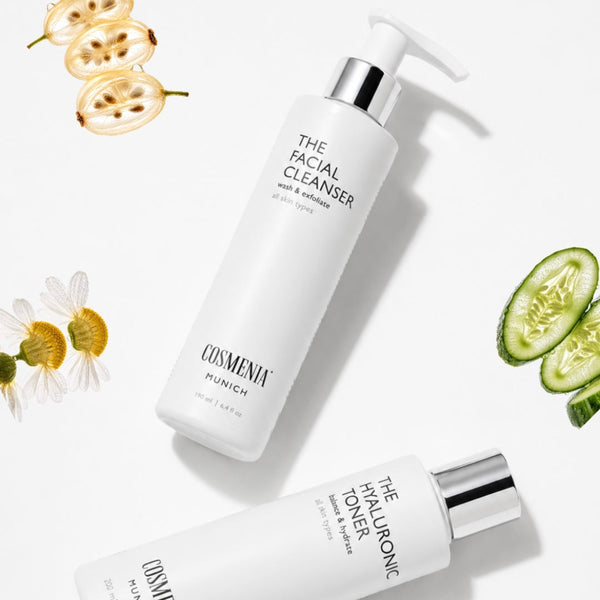
The Hyaluronic Toner combines hyaluronic acid with chamomile and provides the skin with moisture and soothing straight after washing – the moment when the barrier is often at its most sensitive.
Moisture without weighing the skin down
For oily or combination skin, The Glowy Gel with aloe vera and zinc hydrates intensively without weighing the skin down – a good addition if barrier-supporting care is also needed.
Overnight barrier building
If you want to support your skin more intensively after irritation, exfoliation or in the cold season, the rich Beauty Sleep Cream & Mask offers a formulation that regenerates overnight and supports the lipid barrier.
Frequently asked questions about panthenol
Is panthenol suitable for sensitive skin?
Yes. Panthenol is considered one of the best-tolerated moisturising and soothing ingredients of all and is also used for atopic dermatitis or after dermatological procedures.
Can panthenol be combined with other ingredients?
Yes, panthenol is chemically stable and can easily be combined with hyaluronic acid, niacinamide, ceramides or vitamin C without impairing their effect.
Does panthenol also work preventively, not just for acute irritation?
Yes. Used regularly, it supports the long-term building of the skin barrier and can thus reduce the risk of new irritation and moisture loss, rather than just relieving acute symptoms.
Conclusion
Panthenol is a rare case in cosmetics: an ingredient with decades of independent research behind it, whose basic effect on the skin barrier and moisture is well documented. It's important not to transfer specific percentages from wound healing studies uncritically to every everyday cream. As a reliable building block of a barrier-friendly routine, panthenol nevertheless remains one of the most sensible choices – for example in Cosmenia's soothing The Hyaluronic Toner.
Want to see more from COSMENIA in your Google search results? Add us as a preferred source.


Comments