
Urea in Skincare: What the Skin's Own Moisturising Factor Really Does

Note: image partly or fully created with AI.
The short answer
Urea is the skin's most important natural moisturising factor. At low concentrations (3–10 percent) it binds water in the outer layer of the skin and relieves itching; at higher concentrations (from around 10–20 percent) it also has a keratolytic, softening effect on thickened skin. Its effect on dry skin, atopic dermatitis and eczema is well documented by studies – on broken, irritated skin, however, it can sting.
What is urea and why is it in our skin at all?
Urea is a small, water-soluble molecule and an integral part of the natural moisturising factor (NMF) of the stratum corneum. It is formed in the body when protein is broken down and is released onto the skin's surface, among other ways, through sweat. Chemically, urea is hygroscopic: it binds water molecules via hydrogen bonds, creating a kind of water reservoir in the uppermost layers of the skin from which moisture is released only slowly. In healthy skin, urea contributes noticeably to suppleness. Studies show that the urea content in clinically dry skin is reduced by around half, by up to 70 percent in atopic dermatitis and by up to 85 percent in actively eczematous skin. This gap is one of the reasons why urea has been used in dermocosmetics and medicines for decades, long before it became a buzzword.
How urea works on the skin – concentration is key
The effect of urea is strongly dose-dependent. At concentrations of around 3 to 10 percent, the water-binding effect is the main focus: studies show a measurable increase in the water content of the stratum corneum after just one to two weeks of regular use. From around 10 percent, and more strongly at 20 percent and above, urea also has a keratolytic effect – it loosens the bonds between dead skin cells and is therefore used in products for calloused skin on heels and elbows or for psoriasis. Another, often underestimated effect concerns itching: urea has been shown to raise the stimulus threshold of sensitive nerve fibres in the skin. In clinical studies with atopic dermatitis patients, a 10 percent urea cream showed an itch-relieving effect comparable to low-dose hydrocortisone preparations – a remarkable result for a non-prescription ingredient.
What does the research show, critically assessed?
Unlike many newer trendy ingredients, the evidence for urea is unusually solid: a systematic Cochrane review of emollients for eczema concludes that urea-containing creams improve dryness more reliably and make flare-ups less frequent than comparison products – however, more side effects were also reported in the urea group, mainly burning and stinging. This matches practical experience: on severely inflamed, broken or acutely irritated skin, urea can be unpleasantly irritating, which is why it is better suited to maintenance care during stable phases than to an acute flare-up. Eye-catching percentages such as ‘50 percent more skin moisture’ from individual manufacturer studies should also be viewed critically – they depend heavily on concentration, base formula and measurement method and cannot be generalised. From a regulatory point of view, urea is also a special case for certified natural cosmetics: it is a synthetically produced but nature-identical molecule that is only permitted in limited amounts under the COSMOS standard because it cannot be obtained economically from natural sources and fulfils a proven function for skin prone to dryness – one of the few exceptions to the otherwise strict requirement for plant-based or natural raw materials.
Adding moisture to your routine the smart way
Moisture right after cleansing
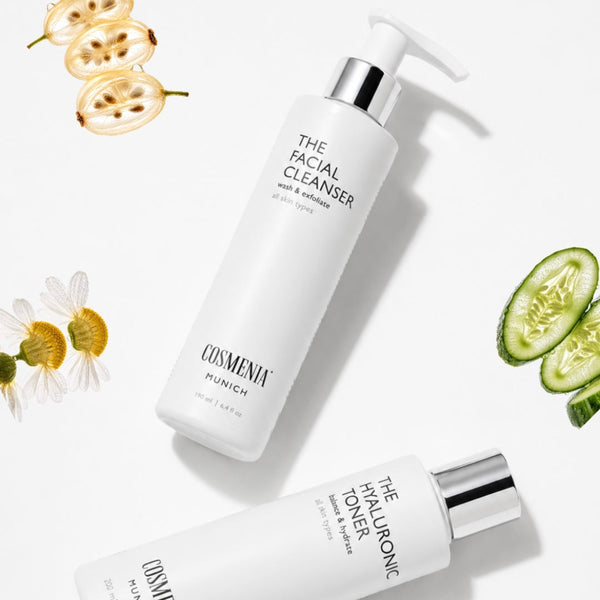
The Hyaluronic Toner relies on hyaluronic acid and chamomile, a plant-based moisturising factor that, like urea, binds water in the stratum corneum – a natural-cosmetics-compliant base straight after cleansing, when the skin needs moisture most.
Daily barrier care
The Day Cream combines plant lipids with sea buckthorn, supporting the lipid barrier that prevents bound moisture from being lost so quickly in the first place – an approach that nicely complements the effect of moisturising factors such as urea.
Intensive care for very dry skin
For pronounced dryness, for example in the cold season, the rich Beauty Sleep Cream & Mask with shea butter offers intensive overnight care that targets dry areas without stinging on irritated skin.
Complete 3-step system
If you want to build a routine where cleansing, hydration and barrier protection are matched to each other, the Hydra Barrier Repair Set offers an uncomplicated routine for persistently dry or stressed skin.
Frequently asked questions about urea
Which urea concentration suits my skin?
For everyday use and on the face, low concentrations of up to around 5 percent are common. Higher concentrations from 10 percent are intended more for heavily calloused areas of the body such as heels or elbows and should be used with caution on the face.
Why does urea sometimes sting?
On intact skin, urea is usually well tolerated. On acutely inflamed, scratched or severely irritated areas, however, it can cause a burning or stinging sensation – caution and a patch test beforehand are advisable here.
Is urea even allowed in certified natural cosmetics?
Yes, but only to a limited extent: the COSMOS standard permits urea as one of the few nature-identical, synthetically produced substances in limited amounts, because economically viable natural production is not possible and the ingredient fulfils a proven function for dry skin.
Conclusion
Urea is one of the best-researched and longest-used moisturising ingredients of all – its effect on water binding and itching is well documented, but the right concentration determines both its benefits and its potential for irritation. If you prefer certified natural cosmetics, plant-based moisturising factors such as hyaluronic acid are a well-tolerated alternative, for example in the soothing The Hyaluronic Toner from Cosmenia.
Want to see more from COSMENIA in your Google search results? Add us as a preferred source.


Comments