
Glycerin in Skincare: Underrated Classic or Just a Cheap Moisturiser?

The short answer
Glycerin is a natural component of the skin's own natural moisturising factor (NMF) and one of the best-documented moisturisers in cosmetics. It binds water in the stratum corneum and reduces moisture loss. In most products, the concentration is 3–10% – despite its reputation as a ‘cheap filler’, its effect is scientifically well established.
What is glycerin?
Glycerin (INCI: Glycerin, chemically propane-1,2,3-triol) is a trihydric sugar alcohol found in practically every cell of the body and is also a natural component of the skin's natural moisturising factor (NMF) – the mixture of amino acids, lactic acid, urea and glycerin that keeps the stratum corneum supple. In cosmetics, glycerin is now mostly obtained from plants, for example as a by-product of fat splitting in soap or biodiesel production, which also makes it readily available for certified natural cosmetics.
How does glycerin work on the skin?
Glycerin belongs to the group of humectants: it attracts water molecules and binds them in the top layer of the skin, both from deeper layers of the skin and – with sufficient humidity – from the surrounding air. Studies show that it works more effectively and more stably than many other humectants, because it also supports the organisation of lipids in the stratum corneum and thus indirectly helps strengthen the barrier function. This also explains why creams containing glycerin reduced eczema flare-ups and the need for topical corticosteroids in clinical studies on atopic dermatitis. Pure water binding alone wouldn't explain this effect – stabilising the skin barrier plays an equally important role.
A critical look: why concentration matters
This is where a closer look is worthwhile, because contradictory figures circulate about the ‘right’ amount of glycerin. Most leave-on products such as creams and serums contain 3–5% glycerin – a range that reliably hydrates without feeling sticky or weighing down the texture. Up to 10%, a drying effect from normal everyday use is considered practically ruled out. Older textbook opinion held that concentrations above 15–20% in low humidity could draw moisture from deeper layers of the skin instead of from the surrounding air and thus paradoxically dry the skin out more. Newer in-vitro data, however, put this into perspective and found a hydrating effect even at concentrations of up to 60%, with the effect only reversing above that. In practice, this means that the debate about exact thresholds hasn't been conclusively settled, but everyday cosmetic formulations almost always fall within the uncritical range of 3–10% anyway. So the accusation that glycerin is just a ‘cheap filler’ doesn't hold up in substance – it says more about the low cost of the raw material than about its effectiveness.
Adding glycerin to your routine the smart way
Moisture right after cleansing
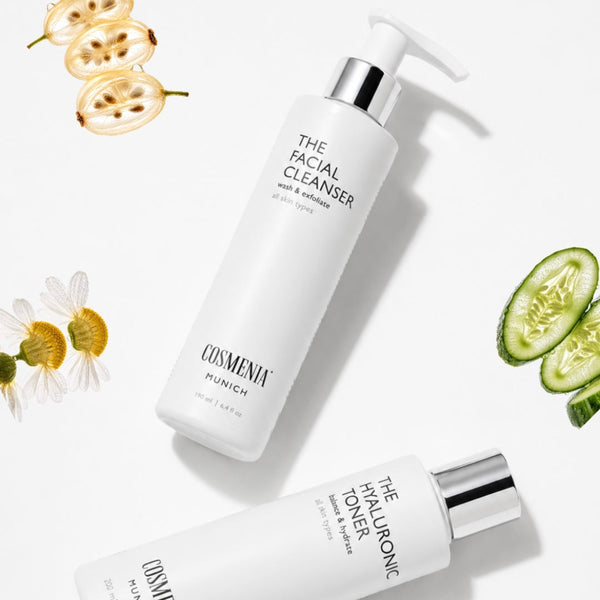
The Hyaluronic Toner combines glycerin and hyaluronic acid with soothing chamomile, laying the foundation for hydration straight after cleansing – the moment when the skin is most receptive.
A light extra boost in between
If you're looking for a quick-absorbing, non-greasy extra dose of moisture, The Hydrating Serum is a good choice, combining glycerin with Alteromonas ferment extract to make the skin look noticeably plump.
Moisture without weighing down oily skin
For combination and oily skin, The Glowy Gel with aloe vera and zinc hydrates intensively without weighing the skin down – a proven duo, especially in combination with glycerin humectants.
Frequently asked questions about glycerin
Is glycerin comedogenic, or does it clog pores?
No, glycerin is considered non-comedogenic. It is water-soluble and doesn't leave a film that could clog pores – unlike some fatty occlusives.
Can I apply glycerin neat to my skin?
Dermatologists tend to advise against this. Undiluted, highly concentrated glycerin can be irritating on very dry skin or in low humidity. In finished formulations with 3–10%, on the other hand, it is well tolerated.
Is glycerin suitable for every skin type?
Yes, glycerin is one of the best-tolerated moisturisers of all and is well tolerated even by sensitive, atopic and blemish-prone skin, as it isn't greasy and is non-comedogenic.
Conclusion
Despite its reputation as a mundane standard ingredient, glycerin is one of the best-researched and best-tolerated moisturisers in cosmetics – a natural building block of the skin's own moisturising factor, not just a filler. As so often, what matters is the concentration and the formulation around it, not the INCI position alone. If you're looking for a reliable basis for daily hydration, you'll find it, for example, in Cosmenia's glycerin-containing The Hyaluronic Toner.
Want to see more from COSMENIA in your Google search results? Add us as a preferred source.


Comments