
Skinimalism: Why Fewer Skincare Steps Often Do More for the Skin Barrier

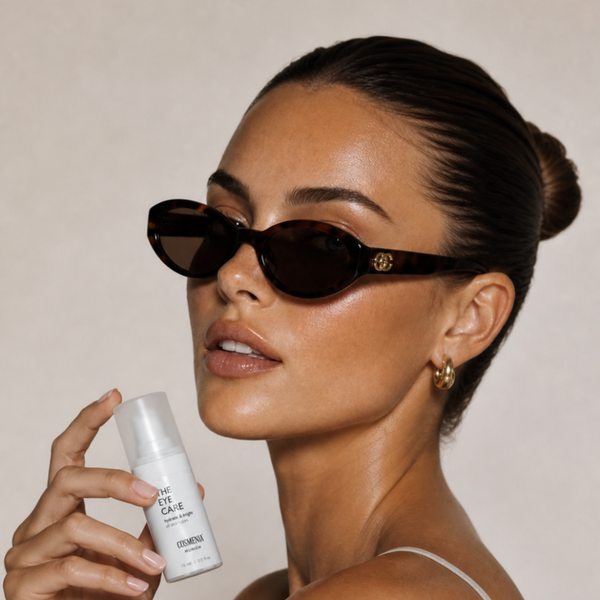
Note: image partly or fully created with AI.
The short answer
Skinimalism reduces your skincare routine to a few carefully matched products instead of combining as many active ingredients as possible at the same time. Dermatological observations show that too many active ingredients tend to overwhelm the skin barrier rather than strengthen it. For most skin types, three to five carefully chosen skincare steps are perfectly sufficient.
From a 12-step ritual to a reduced routine
For years, the motto in skincare was ‘more is more’: ten- to twelve-step routines inspired by K-beauty rituals promised the ultimate glow. Skinimalism and the related concept of slow beauty are the counter-movement. Instead of filling shelves with products, the idea is to reduce your routine to what your skin actually needs – and to see skincare as a conscious, calm moment again rather than a to-do list.
The trend is also a reaction to the visible side effects of overloading: irritated, over-treated skin that reacts to ever more products with redness, blemishes or a weakened acid mantle. ‘Skin fatigue’ – exhausted, overwhelmed skin caused by too many active ingredients – has become an established term in dermatological discussion.
What research on ingredient overload shows
The basic assumption behind skinimalism can be supported scientifically. A Northwestern University study of skincare routines found an average of eleven potentially irritating ingredients per routine – often unnoticed, because the same ingredient is contained in several products at once. Expert consensus on active ingredients confirms that the risk of irritation rises significantly when several potent ingredients such as acids, retinoids or benzoyl peroxide are used in parallel instead of being staggered deliberately.
This also explains why many people achieve better results with a reduced routine: not because fewer ingredients are fundamentally more effective, but because the skin is given time to respond to individual stimuli instead of being constantly confronted with new ones. Important for context: skinimalism is not proof that active ingredients are harmful per se – well-dosed, matched formulations remain useful. The trend is directed against uncoordinated multiple use, not against active ingredients in general. Robust long-term studies comparing skinimalism as a whole with classic multi-step routines are still lacking – the evidence relies mainly on basic research on barrier function and irritation thresholds.
Putting skinimalism into practice with natural cosmetics
The reduced basic routine
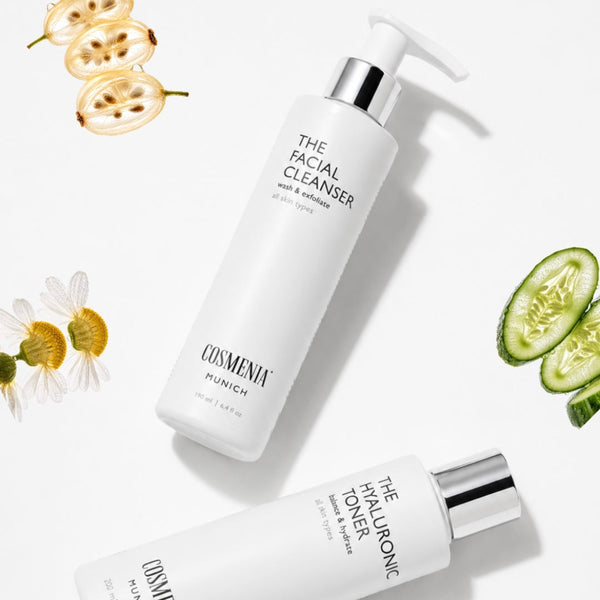
A minimalist routine generally covers three core needs: cleansing, hydration and protection. The Facial Cleanser takes care of cleansing without drying out the skin, while The Hydrating Serum with Alteromonas ferment extract delivers moisture in a single step instead of layering several serums on top of each other. During the day, The Sun Kiss SPF 30 completes the routine as the non-negotiable final step – sun protection is the one step that even skinimalism doesn't drop.
When a system makes more sense than individual products
If you're unsure which products really go together, you'll benefit from matched sets rather than individually assembled combinations of active ingredients. The Hydra Barrier Repair Set brings together three steps specifically matched to the barrier, instead of adding more variables. For travelling, The Travel Routine shows how compact complete skincare can be when you reduce it to the essentials.
When more steps still make sense
Skinimalism isn't dogma. If you're specifically treating a skin concern – such as pronounced dryness, dark spots or anti-ageing – you can sensibly add individual extra steps. What matters is introducing new products one at a time rather than testing several at once, so that you can tell which product your skin is reacting to.
Frequently asked questions about skinimalism
Is skinimalism suitable for every skin type?
In principle yes, although sensitive and barrier-damaged skin often benefits most from cutting back. Very oily or very blemish-prone skin may need more targeted steps in individual cases, but should also introduce them gradually.
Does skinimalism mean giving up ingredients such as retinol or vitamin C?
No. It's not about giving up effective ingredients, but about using them in a targeted way and not in combination with a dozen other potent active ingredients.
How many steps should a minimalist routine have?
As a rough guide, three to five steps: cleanser, one or two active products, and protection during the day or care at night. The exact number depends on your individual skin needs.
Conclusion
Skinimalism is less a new scientific discovery than an overdue correction: healthy skin isn't determined by the number of products, but by how well the individual steps are matched and how much time the barrier is given to regenerate. A reduced routine with carefully chosen, certified natural cosmetics such as the Hydra Barrier Repair Set is often the more sustainable choice than an overloaded shelf full of individual products.
Want to see more from COSMENIA in your Google search results? Add us as a preferred source.


Comments