
Physical vs. Chemical Exfoliation: Which Is Really Kinder to the Skin Barrier?

Note: image partly or fully created with AI.
The short answer
Physical exfoliation removes dead skin cells through friction with granules, brushes or cloths; chemical exfoliation dissolves them with acids such as AHA or BHA, or with enzymes. Chemical and enzymatic variants usually work more evenly and are gentler on the skin barrier, while physical methods can cause micro-injuries with too much pressure or coarse particles. For sensitive, irritated or acne-prone skin, mild chemical or enzymatic exfoliants are usually considered the safer choice.
Two ways to shed the same outer layer
Both types of exfoliation pursue the same goal: removing dead cells from the outermost layer of the skin, the stratum corneum, and stimulating the natural process of cell renewal. The difference lies in the mechanism – and that is exactly what determines how much control you have over the intensity and how high the risk of irritation is.
Physical exfoliation: friction instead of chemistry
Physical exfoliants work through physical abrasion: fine granules, sugar or salt crystals, brushes, sponges or textured cloths loosen skin cells through friction. The effect is immediately visible – the skin feels smoother straight away. But that's exactly what makes the method prone to mistakes: particles that are too coarse, too much pressure or too frequent use can leave tiny micro-injuries in the outer skin layer that are invisible to the eye but measurably weaken the barrier function.
Chemical and enzymatic exfoliation: acids and proteins instead of friction
Chemical exfoliants use alpha and beta hydroxy acids (AHA, BHA) to dissolve the bonds between skin cells without the need for mechanical pressure. A milder variant is enzymatic exfoliants with proteolytic enzymes such as bromelain, papain or ficin, which specifically break down keratin bonds. Since no friction is involved, the risk of micro-injuries is lower – instead, the effect depends on concentration, pH and contact time.
What current research really shows
Studies involving mechanical irritation of the skin (for example in the tape-stripping model) reproducibly show that repeated physical abrasion can lead to increased epidermal proliferation, skin thickening, increased cytokine production and a weakened barrier function – classic signs of a stress reaction in the skin. This doesn't mean that every granular scrub is harmful, but it explains why dermatologists advise caution with coarse scrubs and aggressive brushes, especially for sensitive or already irritated skin.
For enzymatic exfoliants, current research suggests that they can achieve shedding comparable to low-dose AHAs, with lower rates of irritation in sensitive skin populations – one reason why they are increasingly recommended even for rosacea-prone skin, as they don't trigger the flushing reactions typical of acids. For classic chemical peels, a smaller pilot study from this year shows that regular use can reduce sebum production and acne lesions and increase skin hydration; in combination with more invasive procedures such as microneedling, the effects were stronger, but skin hydration also fell more sharply – an indication that more intensive combinations aren't automatically the better choice for the barrier. Important for context: many of these studies involve small numbers of participants and short observation periods, and independent long-term data on daily home use remains scarce.
In practice: which exfoliant suits your skin?
Sensitive or barrier-damaged skin
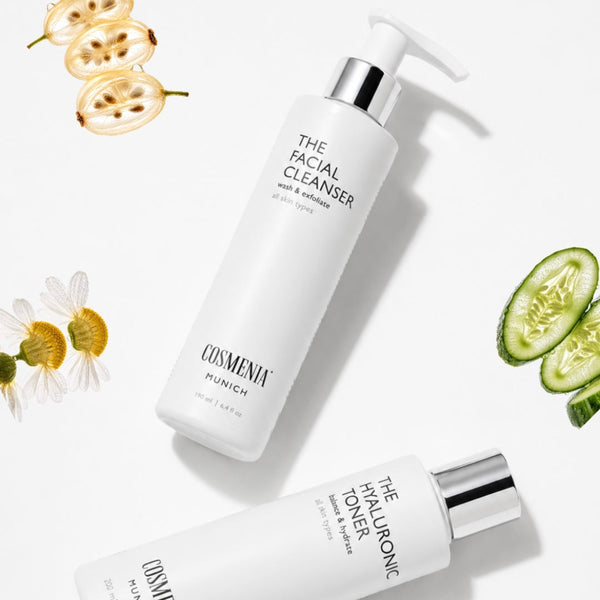
Here, a gentle chemical start via your cleanser is usually better tolerated than any form of friction. Cosmenia's The Facial Cleanser combines low-dose AHA fruit acids with a creamy, non-drying texture, making it a lower-risk starting point.
Resilient skin with a preference for physical cleansing
If you're not prone to irritation and appreciate the instant smoothing effect, you can use a gentle textile exfoliant instead of coarse granules. The reusable Face Cleansing Cloth made from organic bamboo viscose cleanses with a slight mechanical effect without stressing the skin with sharp-edged particles.
After exfoliating: replenish the barrier in a targeted way
Whatever method you choose, your skin needs support after exfoliating. The Day Cream with plant lipids and sea buckthorn provides the lipids that are used up faster by any form of exfoliation and helps the barrier regenerate.
Frequently asked questions about physical and chemical exfoliation
Which method is generally gentler?
On average, chemical and especially enzymatic exfoliants come out as gentler in studies, as they don't require mechanical pressure. But this doesn't automatically apply to every product – chemical exfoliants can also irritate at too high a concentration.
Can I combine both methods?
In principle yes, but not on the same day. Using physical and chemical exfoliation at the same time significantly increases the risk of an overloaded skin barrier. It makes more sense to focus on one main method for your skin.
How can I tell if my exfoliant is too aggressive?
Persistent redness, a feeling of tightness, increased sensitivity to otherwise well-tolerated products or a rough rather than smoother skin feel are typical warning signs. In that case, a break and a focus on barrier-strengthening care help.
Conclusion
Neither physical nor chemical exfoliation is inherently the better choice – what matters are skin type, concentration or grain size, and how often you use it. For sensitive and barrier-damaged skin, research and practice tend to favour gentle chemical or enzymatic variants, while resilient skin can also benefit from mild physical cleansing. In any case: after exfoliating, the skin barrier should be actively supported, for example with The Day Cream, so that the desired fresh effect doesn't come at the expense of skin health.
Want to see more from COSMENIA in your Google search results? Add us as a preferred source.


Comments