
Buying an Extra Hyaluronic Acid Serum: Worthwhile or an Unnecessary Expense?

 The short answer
Hyaluronic acid is now standard in most moisturising products – in toners, serums, day creams, even eye care. Buying an additional single-ingredient serum just for hyaluronic acid is therefore unnecessary in many routines: if you already use a product with enough hyaluronic acid, you gain little from a second one. Your budget is usually better invested in complementary ingredients such as ceramides, which keep moisture in the skin rather than just binding it.
Why hyaluronic acid is in almost everything today
Just a few years ago, a hyaluronic acid serum was a niche product. That has changed since the ingredient stopped being obtained from animal sources such as rooster combs and started being produced biotechnologically through fermentation from plant-based sugar sources – cheaper, purer and more predictable in large quantities. That's exactly what makes it easy for manufacturers to put hyaluronic acid in practically everything: creams, toners, cleansers, eye care. You can read more about how this production works in our article on plant-based hyaluronic acid.
Double doesn't hold twice as well
Hyaluronic acid works as a humectant: it binds water on the skin's surface and in the upper layers of the skin. This effect can't be increased at will by layering several products with the same ingredient – the skin can only absorb and hold a limited amount of moisture. And if the skin barrier isn't intact, the bound moisture evaporates quickly anyway, no matter how many layers of hyaluronic acid have been applied.
There's also a transparency problem: many manufacturers don't state how much hyaluronic acid is actually included or where it appears on the INCI list – and therefore how high the dose is. Buying a second or third product with hyaluronic acid without knowing this is often a bet on marketing rather than on efficacy.
When an additional serum is still worth it
There are situations in which a separate hyaluronic acid serum still makes sense: if your existing routine contains no hyaluronic acid or only a very low dose, for very dehydrated skin that benefits from several molecular sizes, or if a serum is used specifically as a moisture booster before a richer cream. The point isn't that hyaluronic acid is useless – it remains one of the best-documented moisturising ingredients. The point is not to buy it several times over without realising, just because it's on every other package.
In practice: what a Cosmenia routine already contains
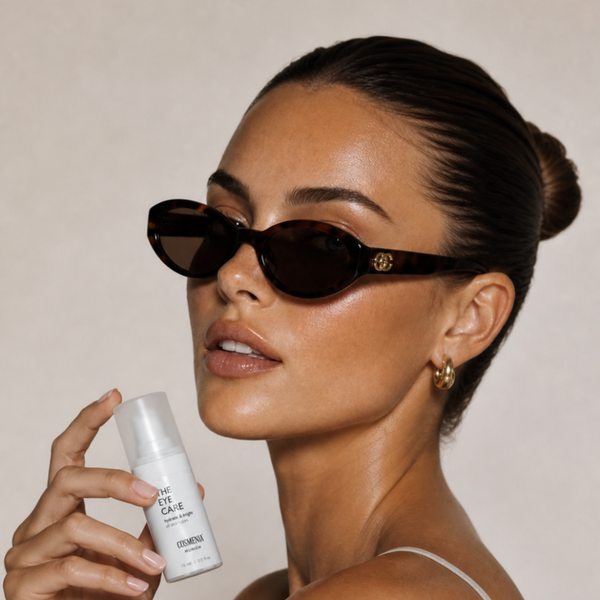
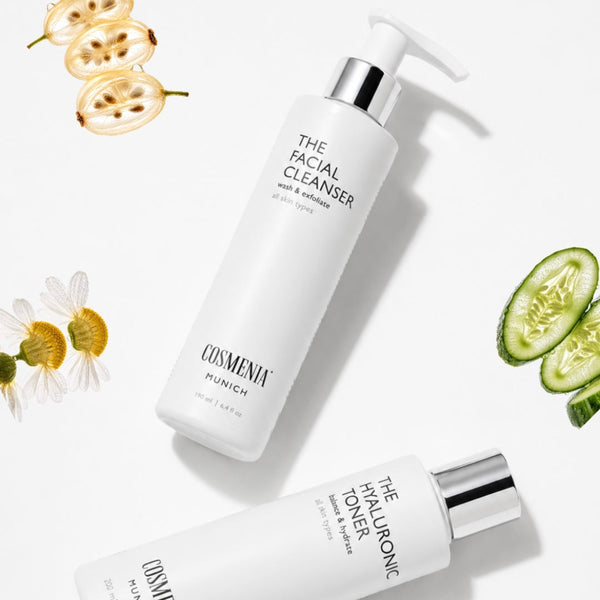
At Cosmenia, hyaluronic acid isn't a standalone product but a fixed part of several steps: the Hyaluronic Toner uses it straight after cleansing, the Hydrating Serum combines it with Alteromonas ferment extract for the skin barrier, and The Eye Care and The Day Cream also contain it. If you use one of these routines – such as The Glow Routine with toner, serum and day cream – you already get hyaluronic acid at several points in your skincare without needing an additional single-ingredient serum.
Frequently asked questions about hyaluronic acid serums
So is hyaluronic acid as an ingredient fundamentally unnecessary?
No. It remains one of the best-researched moisturising ingredients. What is usually unnecessary is not the ingredient, but the additional, redundant product alongside it.
How can I tell whether my product contains enough hyaluronic acid?
One indication is its position in the INCI list: the further up an ingredient is, the higher its concentration usually is. Products that also advertise several molecular sizes are usually formulated more deliberately than plain single-ingredient serums without further information.
Can I still combine hyaluronic acid products?
Yes, it doesn't do any harm – the additional effect is just limited. It usually makes more sense to choose a second product that does a different job, such as ceramides for the barrier or niacinamide for sebum balance.
Conclusion
Hyaluronic acid is now so widespread that an additional single-ingredient serum no longer makes much difference in most routines – especially if your toner, serum or cream already contains it. Before another hyaluronic acid product lands in your basket, it's worth looking at your own routine: it often makes more sense to invest in an ingredient that's still missing rather than one that's already there several times – for example with Cosmenia's Hydrating Serum, which combines hyaluronic acid directly with barrier care.
Want to see more from COSMENIA in your Google search results? Add us as a preferred source.


Comments