
Exosomes in Skincare: Scientific Progress or the Next PDRN?

The short answer
Exosomes are tiny cell vesicles that show promising results when injected in aesthetic medicine. In creams and serums, however, they are almost always quite different, plant-based exosomes – and their effect on the skin has hardly been scientifically proven yet. If you buy an exosome serum today, you're currently paying mainly for the trend, not for established evidence.
What are exosomes?
Exosomes are extracellular vesicles – tiny, membrane-enclosed bubbles with a diameter of around 30 to 150 nanometres that practically every cell releases. They act as a kind of transport capsule: cells pack proteins, lipids, growth factors and RNA fragments into them and send them to neighbouring cells to control processes such as cell regeneration, inflammation or wound healing. In aesthetic medicine, it's mainly exosomes from stem cell cultures that are injected – usually alongside microneedling or laser treatments.
Why is the term suddenly everywhere?
The hype began in clinics, not in drugstores. Because injected, medically obtained exosomes were able to accelerate wound healing and stimulate collagen formation in initial studies, cosmetics brands adopted the term for creams and serums – often without disclosing that it refers to a completely different class of substance.
Plant-based instead of human: the decisive difference
Human or animal exosomes are considered biological or medicine-like substances in both the EU and the US and may not be added to cosmetic products at all. What is sold as ‘exosomes’ in serums and creams is therefore almost exclusively plant-based extracellular vesicles – for example from roses, ginger or rice. They share the same name, but differ significantly in origin, composition and mechanism of action from the human exosomes injected in clinics. This blurring is one of the biggest criticisms of current marketing.
The penetration problem: does anything actually get through?
Even plant-based exosomes, at 30–150 nm, are comparatively large, complex vesicles. The skin barrier reliably lets only much smaller molecules through. Whether, and to what extent, intact vesicles overcome the stratum corneum and reach deeper skin layers has hardly been studied independently so far – a pattern reminiscent of the debate around PDRN: the mechanism of action is theoretically plausible, but proof of actual skin penetration with topical use is largely lacking.
What does current research show?
Reviews from 2025/2026 confirm a fundamental regenerative potential of exosomes for the skin – but the underlying data comes mainly from cell culture and animal studies and from small clinical studies on injected, medical preparations. Independent, placebo-controlled studies on topical, plant-based exosome serums remain rare. In addition, since 2025 the FDA in the US has sent several warning letters to providers of unapproved exosome products and has stressed that no exosome preparation has yet been approved. While this mainly concerns medical applications, it shows how young and unregulated the whole field still is.
Does an exosome serum still make sense?
Not necessarily ineffective – but not the promised breakthrough either. Plant-based vesicles may well bring antioxidant and soothing properties, much like other high-quality plant extracts. However, the premium currently charged for the term ‘exosomes’ bears no proven relation to the demonstrated effect.
Well-researched alternatives
Alteromonas ferment extract instead of the exosome hype
The marine, biotechnologically fermented ingredient in The Hydrating Serum is designed to help protect skin cells from oxidative stress and support cell regeneration.
Multi-weight hyaluronic acid for real hydration
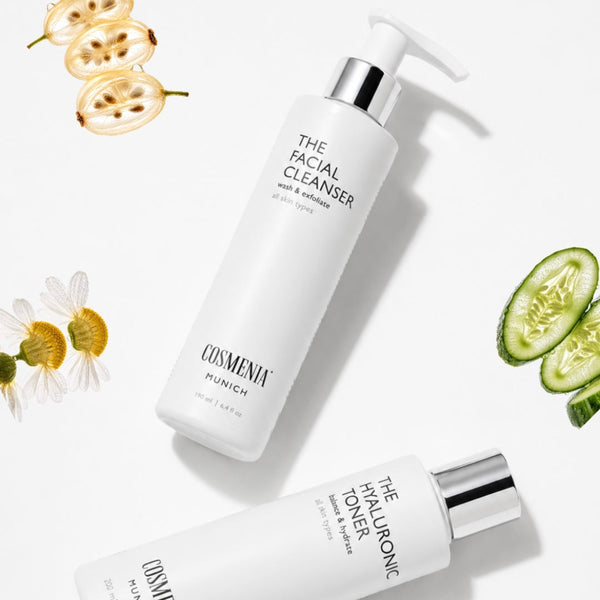
Instead of relying on unclear penetration, the Hyaluronic Toner combines different molecular sizes of hyaluronic acid – one of the best-researched classes of moisturising ingredients of all.
Barrier care for the night
For overnight regeneration, the Beauty Sleep Cream & Mask relies on shea butter and barrier-strengthening lipids rather than trendy but unproven cell messengers.
Frequently asked questions about exosomes in skincare
Are exosomes even permitted in cosmetic products?
Human- or animal-based exosomes are not – they are considered biological or medicinal substances. Only plant-based extracellular vesicles, marketed under the same name, are permitted and available.
Are plant-based exosomes the same as medical exosomes?
No. They differ considerably in origin and composition. Studies on medical, injected exosomes cannot be transferred to plant-based vesicles in a cream.
Is the premium for exosome serums worth it?
Currently, this can't be clearly proven. If you want to invest in effective, well-researched ingredients, you're better off with fermented marine extracts, multi-weight hyaluronic acid or ceramides.
Conclusion
Exosomes are a fascinating field of research – but the leap from the injection needle in the clinic to the tube in the bathroom hasn't yet been made scientifically. At COSMENIA, we rely on ingredients with robust evidence rather than the next buzzword. Discover a routine based on well-researched natural ingredients rather than marketing promises in the Hydra Barrier Repair Set.
Want to see more from COSMENIA in your Google search results? Add us as a preferred source.


Comments