
Redness and Sensitive Skin in Winter: What Really Soothes?

In short
In winter, sensitive skin and cheeks turn red because cold, wind and dry central heating weaken the skin barrier and blood vessels react quickly to changes in temperature. Gentle cleansing, hydration and lipid-rich care soothe. If redness persists or spots appear, see a dermatologist.
Find out more in our skin barrier guide.
Winter redness at a glance
- Triggers: cold, wind, switching between outdoors and heated rooms, washing with water that is too hot
- Mechanism: below 8 °C the sebaceous glands stop producing sebum, according to Pharmazeutische Zeitung; the hydrolipid film thins and water loss rises
- Well documented: cold and wind worsen redness in people with rosacea (46% and 57% in a survey of 1,066 patients)
- Partly documented: lipids and barrier care ease tightness and dryness; direct studies on redness are scarce
- Not documented: that any single ingredient “cures” redness
- See a doctor if: redness is constant, or you notice spots, visible fine veins or burning eyes
Why does sensitive skin turn red in winter?
Sensitive skin reacts faster than normal skin to triggers such as cold, warmth or skincare products, with redness, tightness or stinging. In winter several triggers coincide.
Cold and wind strip away protection
According to a trade article in Pharmazeutische Zeitung (November 2025), the sebaceous glands stop producing sebum below roughly 8 °C. The little sebum that remains spreads poorly, the hydrolipid film becomes thinner and more permeable, and transepidermal water loss rises. Cold air also holds far less moisture than warm air, which increases evaporation further. A weakened barrier lets irritants in more easily, and the skin responds with redness and tightness.
Temperature swings are the stress test
Cold constricts blood vessels and warmth widens them again. The rapid change between sub-zero temperatures and a heated room is especially demanding on the vessels; in sensitive skin this shows as widespread, often blotchy redness on the cheeks and nose. How dry indoor air adds to this is explained in Heating and skin.
Critical view: what the data really show
The effect of cold on redness is best studied in rosacea. In a National Rosacea Society survey of 1,066 people with the condition, 57% said wind worsens their symptoms, 46% named cold weather and 41% indoor heat. Important: these are self-reports from 2002, not controlled studies, and they concern people with a confirmed diagnosis, not every case of winter redness.
For care ingredients the picture is similarly sober: lipids such as plant oils and barrier lipids are considered useful in the specialist literature for limiting water loss. That they measurably reduce redness is hardly proven directly for cosmetics, however. Cosmetics can soothe the skin and cushion triggers – they do not treat a medical condition. Claims such as “redness gone in days” should therefore be read with scepticism. More on the medical causes can be found in Redness on the face.
What really soothes sensitive skin in winter
Cleanse gently with lukewarm water
Hot water dissolves additional skin lipids and widens the vessels. Lukewarm water, a mild cleanser and patting dry instead of rubbing protect the barrier. If your skin feels tight after washing, read Skin feels tight after washing.
Hydration without irritants
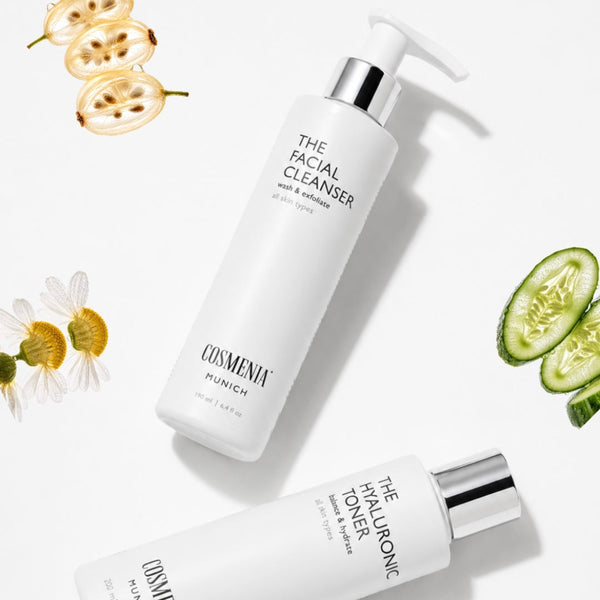
Hyaluronic acid binds water in the stratum corneum, and chamomile is traditionally soothing. The Hyaluronic Toner combines both, without alcohol and without synthetic fragrance.
More lipids in your care
In winter your care can be richer, to supplement the thinner hydrolipid film. The Day Cream contains plant lipids (glycolipids) and sea buckthorn and still absorbs without a greasy feel.
Cut back on actives
Acids, retinol and peels are worth pausing during acute redness. Rebuilding the barrier comes first. Why sun protection can make sense in winter if you are prone to redness is covered in Sun protection in winter.
Our recommendation
The Cleanse & Balance Set suits a gentle winter routine: The Facial Cleanser cleanses without attacking the barrier, and The Hyaluronic Toner then provides hydration and calms stressed skin. The Day Cream with plant lipids adds protection before you head outside. All skincare products are COSMOS certified (The Day Cream: COSMOS Organic).
Frequently asked questions about winter redness
Why do my cheeks turn red in winter?
Cold, wind and the switch to warm indoor air put stress on vessels and the skin barrier. In sensitive skin this shows as redness on the cheeks and nose, often with a feeling of tightness.
Is redness in winter normal?
Short-term redness after being out in the cold is common and usually harmless. If it lasts for weeks or spots and fine veins appear, a dermatologist should check whether rosacea is present.
Which care helps sensitive, reddened skin?
Gentle cleansing, hydration with hyaluronic acid and a lipid-rich cream without strong actives. During acute redness it is best to avoid peels and acids for now.
Does natural cosmetics help against rosacea?
Natural cosmetics can soothe and support the barrier, but they do not replace medical treatment where rosacea has been diagnosed.
Does reddened skin need sun protection in winter?
UV light is a well-documented rosacea trigger; 81% of respondents in the survey named it. If you are prone to redness, mineral sun protection can make sense even in winter, for example in sun and snow.
Conclusion
Redness and sensitive skin in winter are mostly the result of a stressed skin barrier and rapid temperature changes. Gentle cleansing, hydration and lipid-rich care can soothe the skin but do not replace treatment when a medical condition is present. The Cleanse & Balance Set from Cosmenia is a good place to start.
Sources
- Elke Wolf: „Dermokosmetika: Das braucht die Haut im Winter“, Pharmazeutische Zeitung, 5 November 2025
- National Rosacea Society: “New Survey Pinpoints Leading Factors That Trigger Symptoms”, Rosacea Review, Summer 2002 (n = 1,066)
Last updated: November 2026
Want to see more from COSMENIA in your Google search results? Add us as a preferred source.


Comments