PHA (Polyhydroxy Acids): The Gentle Alternative to AHA and BHA for Sensitive Skin

Note: image partly or fully created with AI.
The short answer
PHAs (polyhydroxy acids) such as gluconolactone are chemical exfoliants with a considerably larger molecule than AHA or BHA. They penetrate more slowly and therefore work more gently, while also binding moisture and mildly strengthening the barrier. For sensitive, redness-prone skin, they are considered a better-tolerated alternative – but they are not a complete substitute for stronger acids.
What are polyhydroxy acids?
Alongside AHAs (alpha hydroxy acids) and BHAs (beta hydroxy acids), PHAs form the third major group of cosmetic hydroxy acids. The best-known examples are gluconolactone, gluconic acid and lactobionic acid (INCI: Lactobionic Acid). Chemically, they have several hydroxyl groups on a comparatively large molecular framework – gluconolactone, for example, has a molecular weight of around 178 daltons, considerably more than glycolic acid at around 76 daltons. This molecular size is why PHAs have been marketed in the cosmetics industry since the 2000s as the ‘next generation’ of fruit acids, after AHA peels were increasingly criticised for their irritation potential.
How do PHAs differ from AHA and BHA?
The key difference lies in how fast they penetrate: while glycolic acid quickly reaches deeper skin layers thanks to its small molecule, gluconolactone stays closer to the skin's surface because of its size and works there more slowly and evenly. In studies, this demonstrably lowers the irritation potential compared with AHAs at comparable doses. At the same time, thanks to their many hydroxyl groups, PHAs have humectant-like, moisture-binding properties that are not attributed to classic AHAs in the same way.
One regulatory difference is notable: there is no legal EU maximum concentration for glycolic and lactic acid, but SCCS industry recommendations limit leave-on products to around 6% free acid at a pH above 3.5, including a warning about sun sensitivity. For gluconolactone, there is no comparable discussion in EU cosmetics regulation – an indication that its irritation potential and photosensitisation are considered lower, even though sun protection still makes sense in principle.
What does the research show, critically assessed?
A frequently cited review by Grimes et al. describes improved skin texture in sun-damaged skin and a strengthened barrier function, measured by transepidermal water loss (TEWL), for gluconolactone and lactobionic acid. A study on 10% and 30% gluconolactone peels published in 2023 in the Journal of Cosmetic Dermatology found improvements in sebum production, skin surface pH and TEWL without relevant barrier damage – a result that clearly sets PHAs apart from classic AHA peels, for which impaired water balance is described more frequently.
What remains critical: most available studies are small, often funded by or close to manufacturers and rarely placebo-controlled over longer periods. The frequently repeated claim that PHAs are ‘suitable for every skin type, including rosacea and atopic dermatitis’ is based mainly on a few older studies from the early 2000s and has since been repeated mainly in marketing, without many independent confirmatory studies following. If you are prone to sensitive, inflamed skin, you should therefore test PHAs rather than blindly trusting the ‘gentle for everyone’ advertising claim.
Adding PHAs to your routine the smart way
A gentle start via cleansing
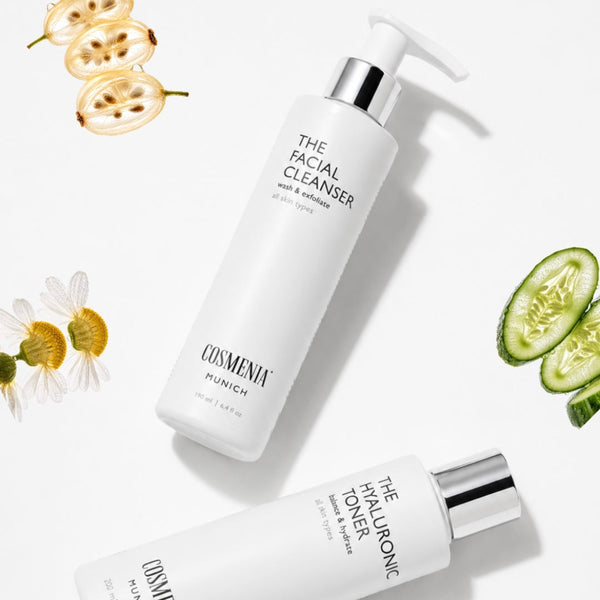
Since pure PHA serums or toners are still rare in certified natural cosmetics, a cleanser with gentle fruit acids is currently the most practical way to start a mild acid routine. The Facial Cleanser from Cosmenia works with low-dose AHA fruit acids and a short contact time – a good first step for testing how well your skin tolerates acids in general before stronger exfoliating products come into question.
Ensure moisture and soothing at the same time
Since PHAs mainly impress with their moisture-binding effect, your routine benefits from a toner that complements this effect rather than competing with it. The Hyaluronic Toner with hyaluronic acid and chamomile soothes irritated areas and supports the moisture balance after cleansing.
Strengthen the barrier after use
Even though PHAs put less strain on the skin barrier than AHAs, rebuilding the lipid layer still makes sense. The Day Cream with plant lipids and sea buckthorn provides exactly the lipids that a regular acid routine also uses up.
Frequently asked questions about PHAs
Are PHAs really less irritating than AHAs?
In most studies, yes – especially at comparable concentrations. But PHAs are not completely free of irritation either – individual tolerance should always be tested.
Can I use PHAs and AHAs at the same time?
Possible, but not necessary. If your skin already responds well to AHAs, PHAs usually add little extra benefit. For sensitive skin that doesn't tolerate AHAs well, PHAs are often the better single option rather than a combination.
Do I still need sun protection with PHAs?
Yes. Even though photosensitisation is considered lower with PHAs than with AHAs, that doesn't replace daily sun protection – especially with regular use of exfoliating ingredients.
Conclusion
PHAs are a scientifically plausible, milder development of classic fruit acids – their molecular size convincingly explains why they irritate less and also bind moisture. However, the research is thinner and older than the marketing around PHAs often suggests, which is why blanket ‘suitable for all skin types’ promises should be read critically. If you want to start a gentle acid routine, The Facial Cleanser from Cosmenia combined with consistent barrier care is a good choice.
Want to see more from COSMENIA in your Google search results? Add us as a preferred source.


Comments