
Sulfur for Blemish-Prone Skin: A Classic Home Remedy Put to the Scientific Test

Note: image partly or fully created with AI.
The short answer
Sulfur is a centuries-old home remedy ingredient for blemish-prone, oily skin with keratolytic, sebum-regulating and antimicrobial effects. However, the dermatological evidence is older and thinner than for modern alternatives such as zinc, and sulfur is also difficult to formulate – poorly water-soluble, strong-smelling and potentially drying.
What is sulfur as a skincare ingredient?
Elemental sulfur (INCI: Sulfur) is a chemical element that has been used externally against skin conditions since antiquity – from Roman sulfur baths to the classic ‘sulfur soaps’ of the 20th century. In cosmetic formulations, it is usually used as a colloidal or micronised dispersion, typically at concentrations of 1 to 10%, because pure sulfur is practically insoluble in water and must be evenly distributed to keep formulations stable.
How is sulfur supposed to work on blemish-prone skin?
Three main mechanisms are attributed to the ingredient: it has a keratolytic effect, meaning it loosens the bonds between dead skin cells and promotes the shedding of clogged pores. It is also said to dampen sebum production and, in laboratory studies, has an antimicrobial effect against Cutibacterium acnes, the bacterium involved in inflammatory blemishes. Combined, these effects are said to produce a mattifying, clarifying result – which is why sulfur traditionally appears in spot treatments, cleansing masks and anti-dandruff products.
What does the research show, critically assessed?
Unlike many modern ingredients, the evidence for sulfur is largely based on older dermatological reviews and traditional use rather than on large, independent, placebo-controlled studies of more recent date. A frequently cited review by Del Rosso (Journal of Clinical and Aesthetic Dermatology) summarises the keratolytic and antimicrobial effects of topical sulfur in acne, but itself points out that much of the data is older and methodologically less rigorous than for established acne ingredients such as benzoyl peroxide or salicylic acid. In direct comparison, sulfur usually comes off as mildly to moderately effective in the clinical literature – helpful as a complementary option, but not an ingredient with the same level of evidence as more modern alternatives.
On top of that come practical drawbacks: sulfur typically smells of rotten eggs (traces of hydrogen sulphide), is technically demanding to formulate and, at higher concentrations or with frequent use, can dry out and irritate the skin – similar to classic, strongly keratolytic acne ingredients. If you tend towards sensitive or already dry skin, start cautiously. From a regulatory point of view, sulfur is permitted in cosmetics in the EU, but like any ingredient it requires a product-specific safety assessment (CPSR). Because of the sensory and stability hurdles mentioned, many modern natural cosmetics formulations now rely on better-tolerated, odourless alternatives with a similar principle – above all zinc.
Adding alternatives to sulfur to your routine the smart way
Sebum regulation without odour or dryness
Instead of elemental sulfur, Cosmenia relies on zinc compounds for oily, blemish-prone skin; they have a similar sebum-regulating and antimicrobial effect but are odourless and can be formulated more gently. The Clear Skin Set brings exactly this combination together – cleanser, toner and a sebum-regulating gel – specifically for combination, oily and blemish-prone skin.
Gentle cleansing as the basis
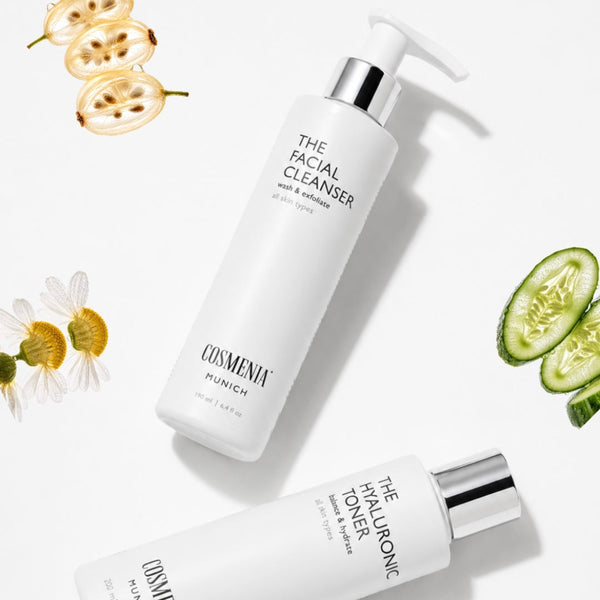
The Facial Cleanser with mild AHA fruit acids takes on the exfoliating function traditionally attributed to sulfur, without putting as much strain on the acid mantle as a more highly concentrated sulfur mask.
Strengthen the barrier after intensive care
If you regularly use sebum-regulating ingredients, you should support the lipid barrier at the same time. The Day Cream with plant lipids and sea buckthorn provides exactly these lipids and prevents over-drying.
Frequently asked questions about sulfur in skincare
Is sulfur more effective than zinc for blemish-prone skin?
Not clearly proven. The research on sulfur is older and thinner, while zinc compounds such as zinc PCA have been investigated in more modern, more independent research – with better tolerability and without the characteristic smell.
Why does sulfur skincare often smell unpleasant?
Elemental sulfur can release traces of hydrogen sulphide in formulations, which explains the typical smell of rotten eggs – a well-known formulation problem with this ingredient.
Is sulfur suitable for sensitive skin?
Not without caution. Its keratolytic effect can dry out and irritate the skin at higher concentrations or with frequent use, which is why sensitive skin often does better with milder alternatives.
Conclusion
Sulfur is a traditional, fundamentally plausible ingredient for blemish-prone skin, but its evidence is older and less independently confirmed than that of modern alternatives – plus there are odour and formulation problems. If you're looking for sebum-regulating care without these drawbacks, Cosmenia's Clear Skin Set is an odourless, well-tolerated alternative.
Related articles on blemish-prone skin
- Niacinamide for blemish-prone skin: what the ingredient can really do
- Zinc PCA for blemish-prone skin: a gentle alternative to benzoyl peroxide?
- Azelaic acid: the underrated ingredient for blemishes, redness and dark spots
- Salicylic acid (BHA) for blemish-prone skin: effects, risks and why Cosmenia relies on AHA
- Mandelic acid for blemish-prone skin: the gentle AHA alternative to glycolic acid?
- Kaolin clay for blemishes: gentle classic or outdated home remedy?
Want to see more from COSMENIA in your Google search results? Add us as a preferred source.


Comments