Fungal Acne (Malassezia Folliculitis): What Skincare Really Helps with Yeast-Related Breakouts
Note: image partly or fully created with AI.
The short answer
Fungal acne, medically known as Malassezia or Pityrosporum folliculitis, is not bacterial acne but an overgrowth of yeast in the hair follicles. It appears as itchy, uniform small pustules without blackheads, usually on the décolletage, back or forehead. Classic anti-acne ingredients barely help – a medical diagnosis and usually antifungal treatment are needed, with light, non-occlusive skincare as support.
What actually is fungal acne?
The term ‘fungal acne’ comes from social media and is medically imprecise: it is not acne in the true sense, but folliculitis – an inflammation of the hair follicles – triggered by an overgrowth of Malassezia yeasts. These yeasts are part of almost everyone's normal skin flora, but under certain conditions they can become pathogenic and multiply unchecked in the follicles. The condition used to be called Pityrosporum folliculitis, after the fungus's old genus name. The overgrowth is encouraged by a warm, humid climate, heavy sweating, occlusive clothing, a weakened immune system and – somewhat counterintuitively – taking antibiotics, because they disturb the skin's bacterial balance and give yeasts more room to spread.
How does fungal acne differ from classic acne?
The most important visual difference: fungal acne appears as very uniform (monomorphic), small, red papules and pustules without blackheads or whiteheads, while classic acne vulgaris shows a mixed picture of blackheads, papules, pustules and sometimes deeper nodules. Another typical feature is itching, which real acne usually doesn't cause. Areas with many sebaceous glands and dense hair follicles are preferentially affected – décolletage, upper back, upper arms and the hairline on the forehead – and less often the rest of the face. Because the two conditions can overlap considerably and fungal acne is frequently misdiagnosed, a dermatological assessment is recommended for persistent blemishes that don't respond to treatment, rather than self-diagnosis via social media.
Why classic anti-acne care often doesn't help: the research, critically assessed
This is the key mistake many people make: common acne ingredients such as benzoyl peroxide or antibiotic creams target the bacterium Cutibacterium acnes – they are ineffective against yeasts. The actual standard treatment for Malassezia folliculitis is topical or oral antifungals; a review published in 2026 puts the success rate of correctly administered oral fluconazole therapy at 80 to 90 percent. That is a medical treatment prescribed by a doctor, not a cosmetics question – natural cosmetics can neither treat nor cure an existing fungal infection, and claiming otherwise would be an impermissible health claim. What skincare products can influence, however, is the food supply for the yeasts: Malassezia needs certain medium- to long-chain fatty acids (C11–C24) to grow, which are abundant in many oil-rich ingredients such as coconut oil, olive oil and some plant-based esters. If you keep applying heavy, occlusive oils and rich creams during an acute flare-up, you may be feeding the overgrowth rather than relieving it. The often-cited ‘antifungal effect’ of niacinamide or zinc at cosmetic concentrations has also hardly been independently proven so far and should not be confused with a genuine antifungal effect such as that shown by approved active ingredients like zinc pyrithione in anti-dandruff shampoos.
In practice: skincare that doesn't feed Malassezia
Cleansing without heavy oils
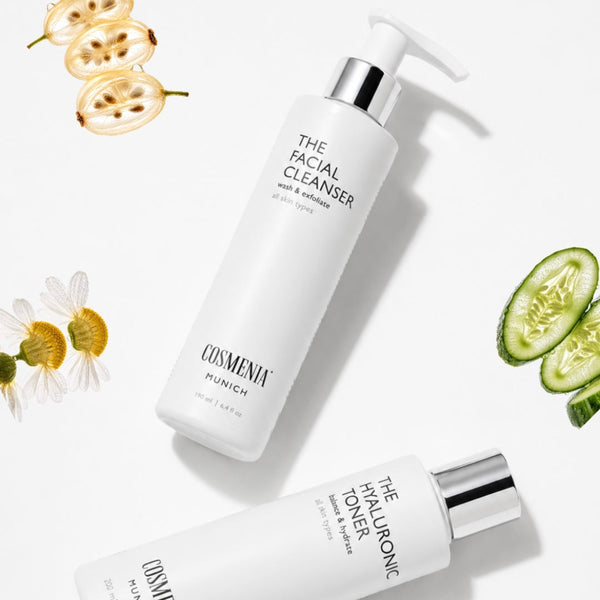
A mild, non-comedogenic cleanser without a high oil content is a sensible first step. The Facial Cleanser with AHA fruit acids removes excess sebum and make-up without leaving greasy residues on the skin.
Light, oil-free hydration
Instead of rich creams, a water-based, oil-free texture is better suited during a flare-up. The Glowy Gel with aloe vera and zinc absorbs quickly and leaves no greasy film that could serve as a breeding ground.
A complete routine for blemish-prone, unsettled skin
If you're looking for a complete, oil-free routine, The Clear Skin Set offers three matched, non-greasy steps especially for blemish-prone skin.
Sun protection without heavy oils
With sunscreen, too, it's worth looking at the texture: The Sun Kiss SPF 30 is an ultra-light mineral formula that protects affected areas without weighing them down.
Frequently asked questions about fungal acne
Can natural cosmetics cure fungal acne?
No. For confirmed Malassezia folliculitis, antifungal treatment by a doctor is the effective route. Skincare products can support the skin alongside this, but cannot eliminate an existing yeast overgrowth.
How can I tell whether it's fungal acne or normal acne?
Typical signs are very uniform small pustules without blackheads, itching and appearance on the décolletage, back or hairline – especially if classic acne care brings no improvement. However, only a dermatological examination can provide a reliable diagnosis.
Which ingredients should I avoid with fungal acne?
Caution is advised with oil-rich ingredients high in medium- to long-chain fatty acids, such as coconut oil, olive oil or very oily formulations, as they can serve as a food source for the yeasts. Light, water-based textures are usually the better-tolerated choice during a flare-up.
Conclusion
Fungal acne is a good example of why an accurate diagnosis should come before a skincare routine: what looks like stubborn acne is often a yeast folliculitis that barely responds to classic anti-acne ingredients and needs antifungal treatment. Alongside this, light, oil-free care such as Cosmenia's The Clear Skin Set can make sense to avoid putting extra strain on the skin – but it does not replace a medical assessment if symptoms persist.


Comments